


The reasons why Spain and the Bernabéu will host the 2030 World Cup final
The complete understanding between Infantino and Florentino Pérez has led to Real Madrid's stadium hosting the World Cup final again 48 years later.
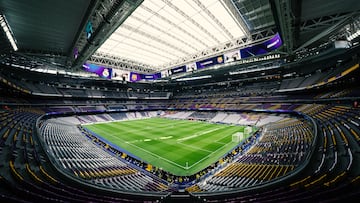

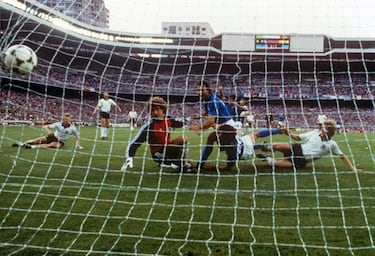
Rafael Louzán’s emphatic message at the Madrid Sports Press Association gala on Monday night caught many by surprise when he stated that the World Cup final, co-hosted by Morocco, Portugal and Spain, “will be played here”. That certainty has not been echoed in Miami or Zurich, home of FIFA’s headquarters, nor at Real Madrid. As this website reported in December, however, everything is already agreed for the 2030 World Cup final to be held at the Santiago Bernabéu, 48 years after Italy and Germany contested the final there in 1982.
From the outset, the World Cup project, initially Iberian before Morocco joined following its heavy investment in football, stadiums and infrastructure, FIFA has worked with the idea of distributing the tournament’s key moments. The event will be staged across six countries if Paraguay, Uruguay and Argentina are included. Among the opening match, the draw and other flagship occasions, the final inevitably stands apart. In that context, Spain and its global footballing significance have played a decisive role.
The Spanish Federation’s work has also been crucial, as has the clear and increasingly close relationship between FIFA and Real Madrid in recent years. The understanding between Gianni Infantino and Florentino Pérez is total, and for more than a year now that alignment has pointed towards the Bernabéu hosting another World Cup final in July 2030.
Louzán limited himself to saying “here”, without publicly naming the stadium, but every step taken so far points in the same direction. The match that will crown the world champions is set to be played at the Santiago Bernabéu.
The other option that has been considered is the Camp Nou. Unlike the Madrid stadium, however, there is little confidence in a venue that remains under construction and is still some way from meeting FIFA’s requirements for a final of this magnitude. Barcelona will still play a significant role in the World Cup, something Joan Laporta continues to push for, but the decisive match already has its venue.
The Bernabéu will meet FIFA’s minimum capacity requirement of 80,000 seats and will also undergo exterior improvements to ensure full compliance. Another key issue was the three-month period during which FIFA requires full control of the stadium. That matter has already been discussed and resolved between Real Madrid and FIFA.
Related stories


Xabi Alonso receives first call from Liverpool
Since Infantino’s arrival, FIFA has consistently worked to ensure that all stakeholders have a presence and a meaningful role in major tournaments. Morocco, for instance, will host the next Club World Cup in 2029 and has also secured the Under-17 Women’s World Cup for the coming years.
Get your game on! Whether you’re into NFL touchdowns, NBA buzzer-beaters, world-class soccer goals, or MLB home runs, our app has it all. Dive into live coverage, expert insights, breaking news, exclusive videos, and more – plus, stay updated on the latest in current affairs and entertainment. Download now for all-access coverage, right at your fingertips – anytime, anywhere.
Complete your personal details to comment