


What happens if the Champions League final ends in a tie? Extra time, penalties, and what the rules say
Extra time and penalty shootouts are the only two ways to settle a Champions League final if the score is level after 90 minutes. UEFA’s rules are clear.
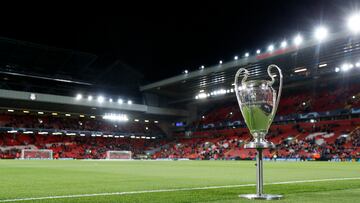

May 31 brings one of the most anticipated moments for football fans across Europe: the Champions League final. PSG and Inter Milan will go head to head in one of the most eagerly awaited clashes in recent memory. Luis Enrique’s side are chasing history, while the Italians are looking to lift the European Cup for the fourth time.
Both teams know this match could be a defining moment in their Champions League journeys. The stage is set, there’s no turning back. The Allianz Arena will host a final that promises to be among the most thrilling in recent years. That makes it worth reviewing some key details — including how the match will be decided if it ends in a draw after regulation time.
How is the Champions League final decided if the game ends in a draw?
One of the most important things to understand about the final is how it would be resolved if PSG and Inter are tied after 90 minutes. As has been the case in recent years, the game would go to extra time — two 15-minute halves, with a short break in between, just like during regulation time.
If no winner emerges after the additional 30 minutes, a penalty shootout will determine the champion. The team that holds its nerve from the spot will take home one of the most coveted trophies in European football: the UEFA Champions League crown.
No golden or silver goals since 2004
The “golden goal” rule once gave victory to the first team to score during extra time. Introduced by FIFA to encourage attacking play, it made its debut at Euro 1996 in England and returned at Euro 2000 in Belgium and the Netherlands. It was a kind of “sudden death” for football. At the 1996 tournament, Germany beat the Czech Republic in the final with a golden goal.
The rule was first used in a World Cup at France 1998, when the host nation beat Paraguay in the Round of 16. It was also applied during the 2002 tournament. After that, FIFA introduced the “silver goal,” used through Euro 2004 in Portugal. Under that rule, the second half of extra time was only played if the score was still tied after the first.
The Greek defender Dellas scored the last-ever silver goal — just before the break in extra time of the semifinal against the Czech Republic. Since then, all knockout matches have followed the same format: two 15-minute halves of extra time followed by penalties, if needed.
Related stories
Get your game on! Whether you’re into NFL touchdowns, NBA buzzer-beaters, world-class soccer goals, or MLB home runs, our app has it all.
Dive into live coverage, expert insights, breaking news, exclusive videos, and more – plus, stay updated on the latest in current affairs and entertainment. Download now for all-access coverage, right at your fingertips – anytime, anywhere.
Complete your personal details to comment