



A giant punished without the ball
With this summer’s tournament, Russia will have missed two World Cups due to its political situation. Meanwhile, a generation of players is emerging in the country, cut off from the global spotlight. “There’s a sense of sadness among the players,” says Guillermo Abascal.
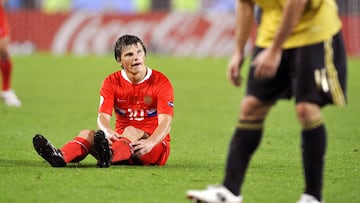
On February 24, 2022, Russia launched its largest offensive to date in the conflict with Ukraine, which has been ongoing since 2014. Four days later, FIFA and UEFA were unequivocal: “All Russian clubs and national teams are suspended from participation in FIFA and UEFA competitions until further notice.” The global backlash to the invasion led both governing bodies to ban all Russian teams, and with the conflict still ongoing, they have yet to return. In the process, an entire generation of domestic players has watched the years pass without the chance to compete at the highest level.
Without attempting to judge whether UEFA and FIFA’s decision is right or wrong, the reality is stark: by the end of this summer, Russia will have missed two World Cups, one European Championship, and four and a half Champions League seasons. It is true that the Champions League had already become increasingly inhospitable to clubs outside Europe’s top leagues, and that the national team was a major disappointment at Euro 2021. Still, Russia’s last footballing memory remains the 2018 World Cup, with its imposing stadiums and a team that, powered by the final years of players like Akinfeev, Dzagoev, Dzyuba and Zhirkov, introduced Golovin to the world and reached the quarterfinals. That says nothing of the country’s broader footballing history, from the Soviet era to the European Championship run led by Arshavin. A sporting giant that has effectively disappeared for more than four years.
Marking the fourth anniversary of the invasion, Croatian Darijo Srna, former player and current sporting director of Shakhtar Donetsk, told AS that conditions were “worse than ever because there is no heating, electricity or light due to Russian attacks on our energy system and infrastructure.” A stark contrast to life as described within Russia.
“I’d say Moscow is one of the safest, most organized, cleanest and most beautiful cities in the world,” said Francis Cagigao, sporting director of Spartak Moscow, who was born in London and holds dual British/Spanish nationality. Spaniard Álex Corredera, who played for Khimki last season, agreed: “You can’t be 100 percent relaxed given what you read and hear, but day to day you don’t really notice it.”
The biggest complication is air travel. To reach Moscow from Spain, routes now go through Belgrade or Istanbul, and airspace near the Ukrainian border remains closed. “You can’t fly directly to Rostov or Krasnodar. We’d go to the nearest airport, Sochi, and then it was about a five-hour bus ride,” said Corredera. Minor inconveniences that, for professionals, did not overshadow the experience. Fellow Spaniard, David Deogracia, who coached Orenburg for 14 months, described it similarly: “I’d go out walking alone to explore cities and never had any problems. Normal life, people on the streets. If I had the chance, I’d go back. I left very happy.”
Elite setting, punished league
Civilian life continues as normal. But what about football? “It’s a very well-organized league. Day to day, there’s no difference from when I worked at Arsenal or Galatasaray,” said Cagigao. Russian football still benefits from the infrastructure boom tied to the 2018 World Cup, with modern stadiums across the country. Of the 15 top-flight venues, 13 have been built since 2010. The other three date from 2002 and 2003 but were renovated in 2017, 2022 and 2003, respectively. They are massive stadiums, averaging 36,182 seats. Attendance, however, is low, with only six clubs averaging more than 50 percent capacity.
| Club | Stadium | Date of construction (renovation) | Capacity | Average attendance 2025-267 |
|---|---|---|---|---|
| Zenit | Gazprom Arena | 2016 | 63,145 | 38,055 |
| Sochi | Fisht | 2013 (2017) | 45,994 | 5,398 |
| Spartak Moscow | Lukoil Arena | 2014 | 45,496 | 22,605 |
| Rostov | Rostov Arena | 2018 | 45,415 | 11,225 |
| Rubin Kazan | Ak Bars Arena | 2013 | 45,379 | 14,026 |
| Pari NN | Sovcombank Arena | 2018 | 45,319 | 3,995 |
| Krylia Sovetov / Akron | Solidarity Samara Arena | 2018 | 42,389 | 8,386/4,983 |
| Baltika | Rostec Arena | 2018 | 35,016 | 17,566 |
| Krasnodar | Ozon Arena | 2016 | 33,395 | 28,352 |
| Akhmat | Akhmat Arena | 2011 | 30,597 | 4,276 |
| CSKA Moscow | VEB Arena | 2016 | 30,114 | 14,641 |
| Lokomotiv Moscow | RZD Arena | 2002 (2017) | 27,320 | 11,705 |
| Dinamo Majachkalá | Anzhi Arena | 2003 (2013) | 26,364 | 5,038 |
| Dynamo Moscow | VTB Arena | 2019 | 25,716 | 15,541 |
| Orenburg | Gazovic | 2002 (2016 and 2022) | 10,046 | 4,931 |
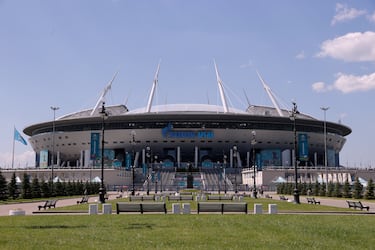
Against this backdrop of normalcy and elite infrastructure, the question is whether the competitive level has declined since 2022. Corredera’s answer is clear: “I was really surprised by the level. I spoke about it with Franc Artiga when I arrived. It’s still very high. There are many teams with huge financial power, signing players for €20 million fairly regularly.” Deogracia agrees: “It’s an unknown league because it doesn’t get much media attention, but competitively and organizationally it’s excellent. If people watched it, they’d be surprised.”
On the field, Corredera describes a divided competition: “There are a lot of South American players at the top, so in that sense there are two leagues. The top eight fight for the title, the rest fight to survive.” This season, Zenit, Spartak, Krasnodar, CSKA, Dinamo and Lokomotiv all have squads valued above €100 million. Rubin Kazan sits at €52.65 million, Rostov at €37.55 million and Samara at €32.05 million, with the remaining six clubs below €30 million. “It’s very physical, very end-to-end. There’s not much tactical structure. It took me time to adapt because I prefer a more controlled style,” said the current Sporting Gijón player.
Most expensive signings in Russia since 2022:
| Player | Club | Price (M$) |
|---|---|---|
| Luiz Henrique | Zenit | 38.3 |
| Gerson | Zenit | 29 |
| Gedson Fernandes | Spartak Moscow | 24.1 |
| Levi Garcia | Spartak Moscow | 21.7 |
| Jhon Jhon | Zenit | 20.9 |
“The league is very attractive, with strong financial backing. But because of the political situation, many players who once came to Russia for European competition have gone to Turkey instead. Galatasaray and Fenerbahçe have benefited,” said Guillermo Abascal, Spartak’s head coach from 2022 to 2024. From a sporting director’s perspective, Cagigao is blunt: “We can’t sign from countries closely aligned with NATO. That’s politics, and there’s little we can do from football. Since I’ve been here, we’ve negotiated with France, Italy, the Netherlands, Turkey… but not England, Germany, the United States, or Scandinavian and Baltic countries.”
A Russian window opens
As a result, more responsibility falls on domestic players. Russian talent continues to emerge and faces fewer barriers to first-team opportunities. “We had, for the first time this century, an all-Russian starting XI, and it was because they were good enough,” said Abascal. “You can talk about Tyukavin at Dinamo, Oblyakov at CSKA. We had Umyarov, who had interest from Serie A clubs. Players like Batrakov or Tyukavin would surprise people.”
Deogracia echoes the sentiment: “They have very good players I’d like to see in other leagues. Batrakov at Lokomotiv, Pedro at Zenit, Spertsyan at Krasnodar. Mourinho wanted Kislyak at Fenerbahçe.”
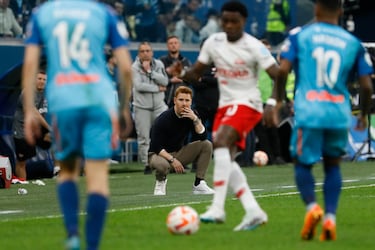
Spanish coach Robert Moreno, former Sochi manager, agrees: “There’s talent, but the very best stay because they earn a lot of money. I had Kravtsov, a modern midfielder with quality and range, similar to Mikel Merino.” He also highlights diversity in player profiles: “You find every type of character. Some are cold, others more fiery. I had Nikita Burmistrov, a local legend, with a personality like an Argentine. It’s unfair to generalize. There are 145 million people. Are all Spaniards the same? Neither are they.”
Recruiting from Russia, however, is difficult. Clubs have strong financial power and, with international options limited, retain their best players on high salaries. “There are players earning so much that it’s hard to move them. I know Spanish clubs have tried to sign a Spartak midfielder and couldn’t afford him,” said Deogracia. There is also a trust factor. “I would recruit from Russia, but I’ve been there. When you know the product, you trust it. They’re professionals, hardworking, respectful. But without European experience, it changes things. They haven’t faced top-level opposition, and that matters.”
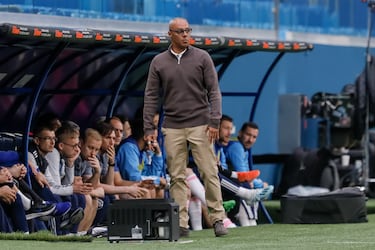
Cagigao points to a broader issue: “Russian players aren’t signed because of perception and political fear that has nothing to do with sport.” The numbers support that view. Across Europe’s top five leagues, there is just one Russian in LaLiga (Zakharyan) and two in Ligue 1 (Safonov and Golovin). None play in the Premier League, Bundesliga or Serie A. Before the war, in 2021-22, there were six spread across those leagues. The presence of Russian players at the elite level has effectively been cut in half.
A damaging ban for athletes
Since summer 2021, Russia’s national team has been coached by Valeriy Karpin. Russian teams were excluded just before the playoff stage for the Qatar World Cup. Since then, they have only played friendlies, mostly against non-elite opposition: Tajikistan, Kenya, Brunei, Grenada. Only Belarus and Serbia, among European nations, have agreed to face them. More recently, they have scheduled stronger opponents such as Chile, Peru, Bolivia, Iran and Qatar. Under these conditions, the results have been striking: 23 games, 15 wins, seven draws and just one loss, to Chile. The goal difference is remarkable: 67 scored, 11 conceded.
“The biggest issue is that they’ve missed two World Cups. It’s very sad that politics influences sport to this extent, denying players the chance to compete internationally,” said Abascal. “We had young talent that could have played in European football but now faces closed doors. At this moment in history, where you’re born determines your opportunities, especially for younger players.”
The impact of the UEFA and FIFA ban is clear. Competing against the best is essential to reaching that level. “Without exposure to Europe, local players don’t train or compete with top-level talent. They can’t learn from it, and the overall level may fall below its historical standard,” he added.
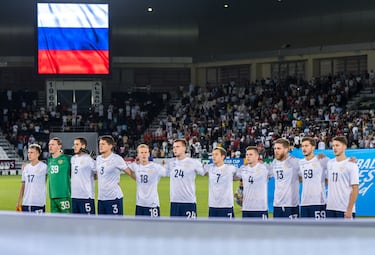
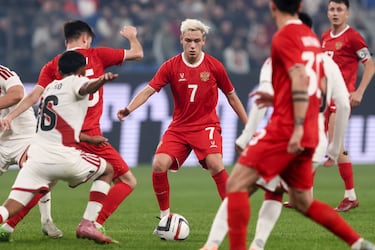
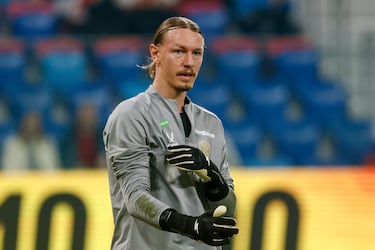
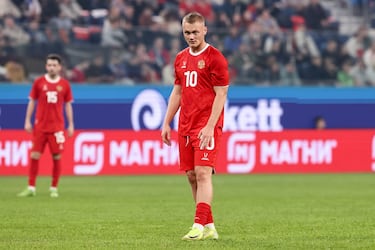
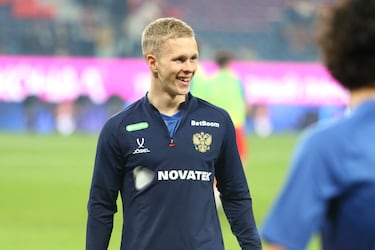
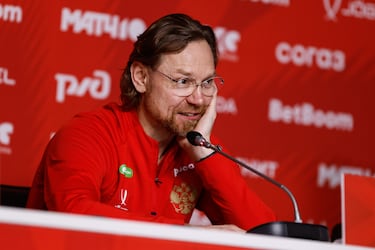
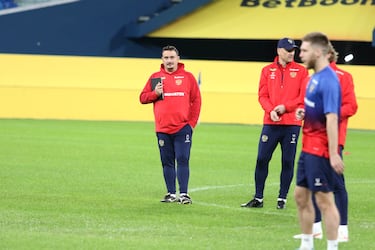
Cagigao takes a similar stance, focusing on the players: “They are being severely affected. It’s very unfair to punish Russian athletes who have no say in politics. Personally, the situation is absurd and unjust. Russia would have a competitive team. When you spend time there, you realize the perception is wrong. The level is much higher than people expect.”
So far, FIFA has appeared more open than UEFA to Russia’s reintegration. Gianni Infantino said in February he was considering lifting the ban, arguing it “has achieved nothing, only created more frustration and hatred. Allowing Russian boys and girls to play elsewhere in Europe could help, at least at youth level.” (UEFA attempted a similar move in 2023, but it collapsed due to opposition from national federations.)
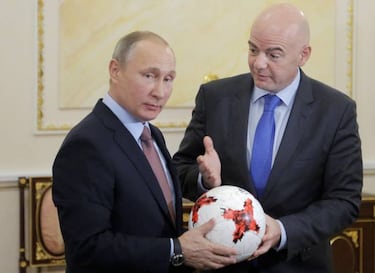
Those comments sparked outrage in Ukraine. Sports minister Matvii Bidnyi called them “irresponsible” and “childish,” noting that more than 650 Ukrainian athletes and coaches have been killed since the escalation of the conflict. From the Russian side, government spokesperson Dmitry Peskov responded: “It’s time to talk about this. Our players and national teams have the right to compete. We hope it will eventually be addressed by FIFA.” Days later, UEFA president Aleksander Čeferin was unequivocal: “UEFA’s position is clear and unchanged.”
“When I was there, you’d hear ‘next year.’ Then it wouldn’t happen, and they’d say ‘next year’ again,” said Deogracia. “So far, they haven’t been given that opportunity, and it’s a shame from a sporting perspective.” Abascal agrees: “There’s sadness among players because football shouldn’t have barriers, and now it does. They’ve been stripped of a competitive framework.” Cagigao questions why professionals are the ones paying the price: “There’s little we can do about decisions made somewhere in the political sphere. But Russia is being harmed. There are countries committing atrocities that are not sanctioned. Why should Russian players pay the price?”
Related stories
Get closer to the game! Whether you like your soccer of the European variety or that on this side of the pond, our AS USA app has it all. Dive into live coverage, expert insights, breaking news, exclusive videos, and more. Plus, stay updated on NFL, NBA and all other big sports stories as well as the latest in current affairs and entertainment. Download now for all-access coverage, right at your fingertips – anytime, anywhere.
And there’s more: check out our TikTok and Instagram reels for bite-sized visual takes on all the biggest soccer news and insights.
Complete your personal details to comment