


What are the details of the new MLB CBA?
After negotiations threatened to go nowhere for so long, the MLB and the players passed a new collective bargaining agreement seemingly out of the blue


After 99 days, the MLB lockout has finally borne fruit. We have an agreement and baseball is back on. But what is the agreement after all of that? Baseball fans are so relieved that the season is back on, that asking for the details of the new collective bargaining agreement is not high on everyone’s priorities.
Most of the news in the first two months focused on money. It is only in the last few weeks that we have become privy to some of the other issues holding things up. So it makes sense to start any discussion with the money. This issue is divided into several layers, but chief among them are the league minimum salary, the bonus pool and how it is divvied up, and the luxury tax, officially the Competitive Balance Tax, threshold.
"We must prevent the greed of baseball's oligarchs from destroying the game."
— Sports Illustrated (@SInow) March 11, 2022
–– @SenSanders https://t.co/Lbxw8jlKiu
Minimum salary
- 2022: $700,000
- 2023: $720,000
- 2024: $740,000
- 2025: $760,000
- 2026: $780,000
This represents the largest single-year salary increase in history, and a larger increase than the total from the past 10 years.
Competitive Balance Tax threshold
- 2022: $230 million
- 2023: $233 million
- 2024: $237 million
- 2025: $241 million
- 2026: $244 million
The $20 million increase from 2021 to '22 is nearly twice as large as the biggest previous first-year increase. A fourth tax level has also been added at $60 million above the base threshold to address runaway spending.
Pre-arbitration bonus pool
$50 million (to be distributed to the top 100 players based on awards and statistical performance). MLB and the MLBPA have agreed to jointly develop a statistical method to fairly allocate this money.
A new feature of the CBA is the creation of a draft lottery. This will be created from the 18 teams who do not make the post season, with a weighting of the odds toward the bottom three clubs. This lottery will award the first six draft picks and is intended to prevent non-contention team from purposely tanking the back end of their season to get a higher pick.
Here's @jimcallisMLB's breakdown of how the CBA impacts the Draft, including the addition of a lottery: https://t.co/T6fQ1gBOw9 pic.twitter.com/EVwRQF1iIv
— MLB Pipeline (@MLBPipeline) March 11, 2022
The suddenly-important-though-never-mentioned-before International Draft has come down with MLB agreeing to eliminate the qualifying offer system for free agents in exchange for the players accepting the International Draft.
This draft would be 20 rounds with signing bonuses guaranteed. Scouting and signing from emerging markets will also carry a financial incentive for teams.
Rules changes
Related stories
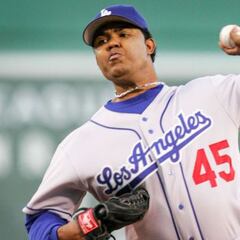

The controversial pitch clock, base size, defensive positioning and automatic ball/strike zone proposals will be studied by a committee, due to be set up in 2023, made up of four active players, six MLB appointees and one umpire.
Here are just a few of the notable rule changes in the newest CBA ⬇️ pic.twitter.com/p6OBZfDjhT
— FOX Sports: MLB (@MLBONFOX) March 10, 2022
Other details
- Contracts for arbitration-eligible players will be guaranteed.
- The postseason will be expanded to 12 teams, with the top two division winners getting a bye.
- Universal designated hitter.
- Players may only be optioned five times per season.
One of the major rule changes to the new CBA is the National League adopting the designated hitter.
— ESPN Stats & Info (@ESPNStatsInfo) March 11, 2022
Pitchers hit .110 in 2021, the worst mark in a full season in MLB history.
Max Scherzer might not mind after going 0-for-59 last season. pic.twitter.com/NaxsbULM9k
There is a lot to take in, but not so much as was feared. In all of this chaos, you can’t help but wonder if the owners really needed to wait six weeks to present this to the players. Or indeed, if a lockout was needed at all.