


1588: The storm that crushed an empire: Inside the fall of Spain’s ‘Invincible’ Armada
This is the story of how the famous Spanish armada met its end.
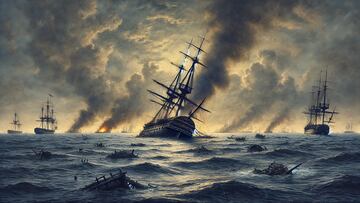

On August 8, 1588, off the coast of Gravelines, France, a once-mighty Spanish armada met its undoing. Ironically dubbed the “Invincible Armada,” Spain’s grand fleet — assembled by King Philip II to secure control of the English Channel and overthrow Queen Elizabeth I — was defeated by the English.
The Armada had set sail from Lisbon in late May with around 130 ships carrying nearly 20,000 soldiers and seamen, along with 2,500 guns.
However, a devastating mixture of delays, English naval tactics, and heavy storms soon took its toll. By late July, as the Armada reached England’s shores, but only six Spanish ships out of the 129 were destroyed through naval combat.
The History Reader writes that “a minimum of fifty Armada ships (probably as many as sixty-four) were lost through accident or during the Atlantic storms that scattered the fleet en route to England.”
The climax came on August 8: English vessels blazing fireships into Calais, forcing the Spanish ships to scatter in alarm. Taking advantage of the chaos, the English struck at dawn in what became known as the Battle of Gravelines.
By the time Spanish made their way back to Spain in October, nearly half the fleet had been lost, and an estimated 15,000 men had perished. The catastrophic failure marked a pivotal moment in history: for England, the victory was both militaristic and symbolic. The defeat sealed England’s reputation as an emerging naval power, and brought in a new era in naval warfare.
Get your game on! Whether you’re into NFL touchdowns, NBA buzzer-beaters, world-class soccer goals, or MLB home runs, our app has it all.
Dive into live coverage, expert insights, breaking news, exclusive videos, and more – plus, stay updated on the latest in current affairs and entertainment. Download now for all-access coverage, right at your fingertips – anytime, anywhere.
Complete your personal details to comment