


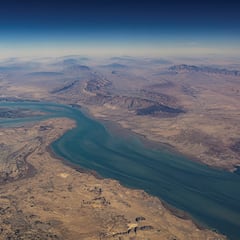
Located between Oman and Iran, the Strait of Hormuz is the world’s most important access route for oil transportation.

A military intelligence expert’s warning: “If you cut the Strait of Hormuz, the world’s richest neighbors will be pissed off”
The United States’ attack on Iran has not only political and military repercussions, but also significant economic implications—especially in relation to oil, which may be one of the most affected assets.
The Strait of Hormuz, the only maritime passage for transporting oil from the Persian Gulf to international waters, plays a crucial role in this scenario.
BREAKING: An American oil tanker was reportedly struck by an Iranian anti-ship missile near Oman while attempting to enter the Strait of Hormuz.
— Ed Krassenstein (@EdKrassen) March 2, 2026
Iran is trying to hurt America and the world by reducing the supply of oil.
Remember, Trump did this. pic.twitter.com/hUdGLLazCv
As tensions between the U.S. and Iran rise, attention has also shifted to the broader strategic stakes, especially in the Strait of Hormuz. This narrow waterway between Oman and Iran remains the most critical maritime route for global oil transport. Speaking to AS during the Israel - Iran conflict in June 2025, a military intelligence analyst from Shadow Lynx noted, “If you cut off the Strait of Hormuz, the richest neighbors in the world will get angry.” The analyst added that the suspected launch point of the missiles was approximately 150 kilometers from Dubai’s Palm Jumeirah luxury complex.
The Strait of Hormuz is not only a key conduit for nearly 20 percent of the world’s oil supply but also for the movement of luxury vehicles, freight shipments, and construction materials. Any disruption to this route could significantly raise transportation and insurance costs, compounded by the threat of military escalation involving mines, drones, or missile attacks.
The Strait of Hormuz also lies near major oil and gas reserves, including those off the coast of Qatar, an ally of Iran. Regional instability, including increased Houthi activity, has further raised concerns among analysts about the potential for widespread disruption.
Iran has CLOSED the Strait of Hormuz.
— Brian Allen (@allenanalysis) February 28, 2026
This is a global economic shock.
~20% of the world’s oil — over 20 million barrels per day — flows through that corridor.
Now?
- Oil could rip toward $120–$130
- U.S. inflation could surge back near 5%
- Every $10 oil spike adds ~0.2% to… pic.twitter.com/vN6YQREmzR
This conflict could cause oil prices to skyrocket over the next week if Trump continues with his war on Iran. Forget about low gas prices and affordability as long as this scenario continues in the Middle East.
Related stories

Get your game on! Whether you’re into NFL touchdowns, NBA buzzer-beaters, world-class soccer goals, or MLB home runs, our app has it all. Dive into live coverage, expert insights, breaking news, exclusive videos, and more – plus, stay updated on the latest in current affairs and entertainment. Download now for all-access coverage, right at your fingertips – anytime, anywhere.
And there’s more: check out our TikTok and Instagram reels for bite-sized visual takes on all the biggest soccer news and insights.
Complete your personal details to comment