


Are we living in a cosmic “hole”? This new theory is shaking up modern astronomy
This new theory suggests we are living in a huge hole in the cosmos.
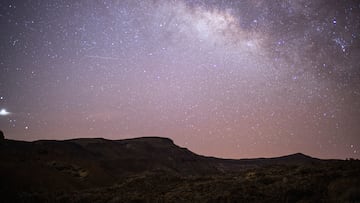

New research suggests that our planet may be located within a billion-light-year-wide cosmic void — large enough to fit 20,000 Milky Way galaxies lined up from one end to the other.
This newly identified ‘hole in space,’ known as the KBC Void, may have a density roughly 20% lower than the cosmic average — a figure that lies at the more extreme end of expectations for cosmic voids discovered so far.
Indranil Banik, a postdoctoral research fellow at the University of Portsmouth, and his team found striking signs of a local void by analysing baryon acoustic oscillations (BAOs) — subtle ripples in matter density left behind by pressure waves from the Big Bang that became imprinted in the early Universe.
A new study suggests Earth may lie inside a giant cosmic void nearly 2 billion light-years wide. pic.twitter.com/eavKVU1Tfq
— Cosmoknowledge (@cosmoknowledge) July 10, 2025
Cosmic void opens huge questions about Universe
Over billions of years, these oscillations have influenced how galaxies are distributed throughout the cosmos. According to the Cosmological Principle, matter in the Universe should be uniformly distributed on very large scales — but that doesn’t appear to be the case when we analyse our region of space.
By examining two decades’ worth of observational data, the researchers found consistent evidence supporting the idea that we are situated within a vast under-dense region — approximately 20% emptier than the surrounding cosmos.
“By now it’s pretty clear that we are in a significant underdensity,” Banik told Business Insider. “There are still a few people who oppose the idea to a limited extent. For example, some have correctly argued that such a void shouldn’t exist in the standard model — which is true. But unfortunately, that doesn’t prove it’s not there,” he added.“
A potential solution to this inconsistency is that our Galaxy is close to the centre of a large, local void,” Banik continued. “As the void empties out, the velocity of objects moving away from us would be larger than if the void were not there. In other words, it would make the local Universe appear to be expanding faster than it actually is.”
Related stories


To expand on that last point: the void’s existence could explain why nearby stars and galaxies appear to be receding from us faster than expected — exceeding the Hubble Constant, which should theoretically be consistent across the Universe. This discrepancy is known as the Hubble Tension, a major puzzle at the forefront of modern cosmology and still under active investigation.
Get your game on! Whether you’re into NFL touchdowns, NBA buzzer-beaters, world-class soccer goals, or MLB home runs, our app has it all. Dive into live coverage, expert insights, breaking news, exclusive videos, and more – plus, stay updated on the latest in current affairs and entertainment. Download now for all-access coverage, right at your fingertips – anytime, anywhere.
Complete your personal details to comment