


Avi Loeb, Harvard astronomer, claims the 3I/ATLAS could be an alien spacecraft: “Let’s just keep our fingers crossed”
The controversial scientist has once again spoken out about his desire to find little green men aboard 3I/ATLAS.
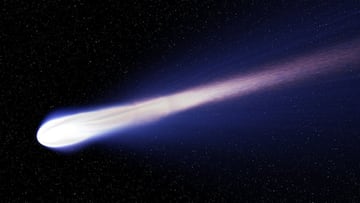

In space, no-one can hear you scream. Not even if you’re talking nonsense, like Avi Loeb. The Israeli scientist is campaigning harder than Zohran Mamdani on his mission to convince everyone that extraterrestrials may be behind the 3I/ATLAS comet, which has captured the imagination of the public due to interesting finds on the object from the scientific community.
High-resolution images taken by NASA’s Mars Reconnaissance Orbiter are set to be returned to Earth soon, and they hope to provide insightful information about the comet making its way through our patch of sky.
Despite scientists across the world all but certain that the comet is made up of simple elements found commonly across the universe, Loeb retains personal hope that aliens are behind the trajectory that caused eyebrows to be raised earlier in the year.
Speaking to NewsNation, Loeb argued that “the verdict is still out,” adding that he was “very much looking forward to getting more data in the coming weeks.”
“You know, that’s the way science should be done,” he said, as though no scientist ever waited for data to come in before making a conclusion on a hypothesis. “It’s like a detective story, and any of my colleagues who claim to know it’s a comet of a type that is familiar to us is not really curious or imaginative about nature. Let’s wait, then check what the subject is in the coming weeks rather than give the verdict now.”
“Let’s just keep our fingers crossed,” he concluded.
Avi Loeb, a Harvard professor, has made a name for himself in newspaper columns that use exclamation marks in their headlines and websites with advertisements for you to buy a piece of the moon. In his outrageous hypotheses that travel faster than light itself, one regular theme turns up: aliens.
The theoretical physicist put together a $1.5-million expedition to find pieces of the meteor CNEOS 2014-01-08, which entered Earth’s atmosphere in 2014, somewhere off the northern coast of Papua New Guinea in the South Pacific. He claimed that it could have been aliens, and appeared on various high-profile podcasts spreading the rumours, as well as writing a best-selling book. In the end, he found absolutely nothing that the scientific community took seriously. But he got a book out of it, so who’s the real winner?
We're hosting a live event on Wednesday, Nov. 19 to share the latest images of the interstellar comet 3I/ATLAS, collected by several NASA missions.
— NASA (@NASA) November 17, 2025
Tune in for the details—and send in your questions for the livestream with #AskNASA: https://t.co/vcFamtcjK2 pic.twitter.com/0d7fkTwRVP
Related stories
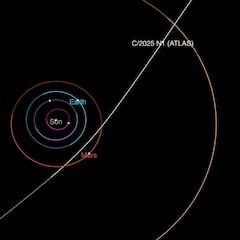
The same thing occurred more recently with Oumuamua, the strange comet he controversially described as potentially alien in origin. He wrote a book after that one passed without incident, too.
Get your game on! Whether you’re into NFL touchdowns, NBA buzzer-beaters, world-class soccer goals, or MLB home runs, our app has it all. Dive into live coverage, expert insights, breaking news, exclusive videos, and more – plus, stay updated on the latest in current affairs and entertainment. Download now for all-access coverage, right at your fingertips – anytime, anywhere.
Complete your personal details to comment