


Bad news for US tourism: People travelling to the US will have to provide access to their social media accounts
The potential social media checks would affect everyone coming into the country.
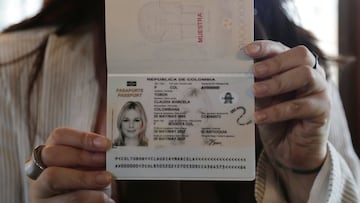

The Leader of the ---- World continues to rub hard and scream in excitement over the joy he gets from removing the word ‘free’ from America’s moniker on top of the official headed papers scattered across his desk. A new eraser must be on his Christmas list and we will wait and see if Santa Claus has the same morals as Gianni Infantino and grants him a gift this season.
The United States, under their administration, moving in ways that give words like ‘freedom’ and ‘American spirit’ new meanings, continues its quest to isolate itself from the rest of the planet while paradoxically sticking fingers and toes into foreign pies on a daily basis.
The government are now preparing to roll out a new requirement for tourists, even those who normally travel without a visa, which highlights the deep-rooted feelings of insecurity and paranoia that underscore Trump at a fundamental level. Under a proposal from U.S. Customs and Border Protection (CBP), all foreign visitors, including those eligible for visa-waiver entry, may soon be required to provide up to five years of social media history as part of their travel authorisation process.
Currently, many travellers from countries like the UK, France, Germany, Spain or Japan enter the U.S. through a relatively simple procedure using the Electronic System for Travel Authorization (ESTA). This system requires some basic personal information and costs around $40.
A 21-year-old Norwegian tourist was refused entry into the US, detained, and deported back home after ICE officers found a JD Vance meme on his phone.
— AF Post (@AFpost) June 24, 2025
Follow: @AFpost pic.twitter.com/bc7cbvEGfM
However, this process is being upended by the Trump administration. Under the proposed changes, the application would expand significantly: in addition to sharing all their social media handles used in the past five years, travellers might also need to provide phone numbers, email addresses, and other personal data.
According to official documents, CBP would also ask for a selfie and could gather biometric data — including fingerprints, facial recognition, and even iris or DNA scans. These proposals are currently open for public comment over the next 60 days.
The new plan marks a dramatic expansion of digital scrutiny for visitors. Until recently, such social media disclosure was largely limited to visa applicants — such as students, exchange visitors or people applying for work permits — rather than short-term tourists. Things could now be set to change.
“These barriers will hit travel hard... holidaymakers simply go elsewhere”
Related stories

Reactions from the travel sector have been swift and critical: industry leaders warn that such invasive demands could discourage many would-be visitors. Julia Lo Bue-Said, chief executive of the Advantage Travel Partnership, told The Independent: “These barriers will hit UK travel to the USA hard. History shows us that when a destination becomes harder to reach, British holidaymakers simply go elsewhere... “Right now, US bookings are up 20 per cent across our membership, driven by events like the football World Cup, but new obstacles could quickly reverse that trend.”
The CBP also say that they may require everyone to download and use the official application in order to submit their details, another step in the direction of data farming in the modern age. Under the guise of “fraudulent third-party websites,” the CBP claim that they “charge travellers exorbitant fees to process an application.” They don’t even shy away from saying that “CBP will use geolocation services to confirm that the traveller reporting their departure is outside the United States, as well as run ‘liveness detection’ software to determine that the selfie photo is a live photo.”
Complete your personal details to comment