


ChatGPT fails simple task even a 6-year old could do - and the explanation is obvious
These days, most of us have a clever little personal assistant in our pocket 24/7, but some very simple flaws remain.


Ask ChatGPT, DALL·E, Midjourney or any other image generator to draw a clock showing 7:25, and you might get a lovely picture. A beautiful wooden frame, sleek and elegant hands. Whatever style you want. But look closer at that analog clock: is it set to 10:10?
Why AI clocks like the time 10:10
It’s not a glitch. Well, not really, even though it feels like one to us. It’s more like a feature of AI’s training data. Let me explain further.
AI doesn’t understand what a clock is or how time works. It just predicts what a ‘correct’ clock image should look like, based on billions of images it’s seen before. And when it comes to clocks, most of those images come from watch ads, where the hands are almost always set to 10:10.
That layout looks symmetrical, frames the brand logo, and makes the product more appealing. So when you ask an AI to make a clock, guess what it delivers?
Let’s give it a go... “Dear ChatGPT, please create an image of a confused child holding a drawing of a correct 3:45 clock, next to an AI-generated one showing 10:10.”
Result...
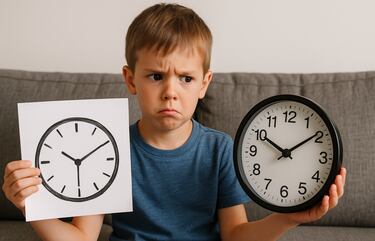
This issue happens so often that even when the AI gets the numbers right – say, it prints “7:20” on a digital readout – the analog hands still drift toward that advertising-friendly position. A six-year-old can draw a clock correctly. But AI, despite all its complexity, just mimics what it’s seen over and over again. And it’s seen a lot of 10:10s.
What does this say about how AI really works?
As you have likely now gathered, if you didn’t already know, these AI tools don’t actually think. They don’t reason. They can’t understand context. They guess, based on patterns in their training data. And if the data is skewed – toward 10:10 clocks, biased hiring resumes, or unrepresentative medical images – then the output is skewed too.
So that stubborn little clock is a useful reminder. When AI gets things wrong, it often reflects what it’s been shown, not what’s true.
Which makes it a great teaching tool. Want to start a conversation about algorithmic bias, AI limitations, or digital literacy? Just ask a student to generate a clock. Then ask: why 10:10?
Because it turns out that even when no one’s watching the clock, it still tells us something about who trained it.
Related stories
Get your game on! Whether you’re into NFL touchdowns, NBA buzzer-beaters, world-class soccer goals, or MLB home runs, our app has it all.
Dive into live coverage, expert insights, breaking news, exclusive videos, and more – plus, stay updated on the latest in current affairs and entertainment. Download now for all-access coverage, right at your fingertips – anytime, anywhere.
Complete your personal details to comment