


Evidence of a sea turtle stampede millions of years ago is discovered by accident
Fossilized tracks on Italy’s Monte Conero could reveal turtles or marine reptiles fleeing a massive earthquake millions of years ago.
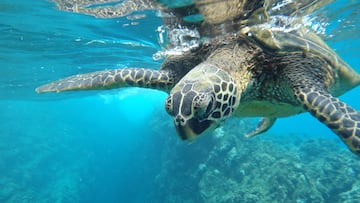
A group of climbers exploring Monte Conero, a rocky cliff near Ancona in Italy’s Marche region, stumbled upon a series of unusual grooves and indentations in the limestone face. After contacting experts from the Coldigioco Geological Observatory, researchers now believe the marks may belong to marine reptiles from the Late Cretaceous period, including sea turtles, plesiosaurs, or mosasaurs.
Evidence of a prehistoric stampede
Published in Science Direct, the study suggests the tracks likely represent a “panic stampede of sea turtles” forced into motion by an ancient earthquake. The movement was quickly preserved under a layer of sediment, known as a fluxoturbidite, triggered by the same seismic event. This natural burial has protected the tracks for millions of years.
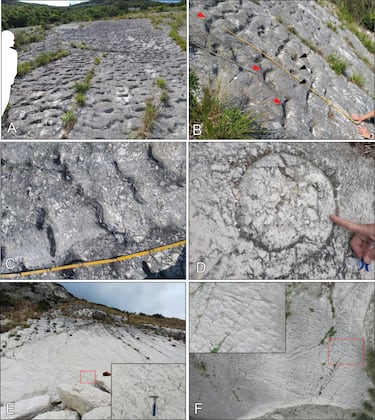
Millions of years ago, the cliff face was part of a deep seabed that eventually rose due to tectonic activity. The discovery suggests the limestone may have been involved in a submarine avalanche caused by an earthquake, prompting the creatures to flee and leaving behind their distinctive tracks.
Unusual track patterns raise questions
“These footprints are unusual because they appear to show an underwater paddling motion, where both front limbs enter the sediment simultaneously as the animal moves forward,” said Michael Benton, a vertebrate paleontology professor at the University of Bristol in the U.K., who was not involved in the research. Benton is skeptical that turtles made the tracks.
He noted that vertebrates rarely move both limbs at the same time. “Sea turtles usually swim with a highly efficient ‘underwater flight’ technique, where their front flippers rotate in circles,” Benton explained. In his view, this swimming pattern doesn’t match the fossilized marks. He also questions why turtles wouldn’t have simply swum away from the seabed instead of leaving such tracks.
Related stories
Get your game on! Whether you’re into NFL touchdowns, NBA buzzer-beaters, world-class soccer goals, or MLB home runs, our app has it all.
Dive into live coverage, expert insights, breaking news, exclusive videos, and more – plus, stay updated on the latest in current affairs and entertainment. Download now for all-access coverage, right at your fingertips – anytime, anywhere.
Complete your personal details to comment