


“It’s like a time capsule”: the Stone Age settlement found beneath the waves
Researchers are exploring ancient settlements that were overtaken by rising sea levels some 8,500 years ago at the end of the last ice age.
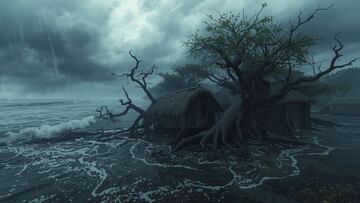

Rising sea levels threaten numerous population centers around the globe as rising global temperatures melt ice sheets. But this isn’t the first time that humanity has had to deal with this problem.
At the end of the last ice age, Stone Age coastal communities around the world had to adapt to rising waters that swallowed their dwellings. Researchers in Europe are investigating these submerged settlements that have been underwater for the past 8,500 years.
“It’s like a time capsule”
Archaeologists are currently exploring a site in the Bay of Aarhus in northern Denmark as part of a six-year, international project, which also includes a site off the coast of Germany in the Baltic Sea and sites in the North Sea. The goal is to map the seabed and investigate submerged Stone Age settlements in Northern Europe before offshore wind farms and other underwater infrastructure are developed in the areas.
Using what is essentially an underwater vacuum cleaner to suck up material from the seafloor, the team of archaeologists have excavated an area of about 430 square feet at the Aarhus site. So far, they’ve unearthed animal bones, arrowheads, stone tools and a piece of worked wood, believed to be a simple tool.
The Mesolithic settlement located 26 feet underwater provides researchers with an opportunity that similar inland settlements cannot. “It’s like a time capsule. When sea level rose, everything was preserved in an oxygen-free environment … time just stops,” said Peter Moe Astrup, the underwater archaeologist that is leading underwater excavations in Denmark, speaking to the Associated Press.
“We find completely well-preserved wood. We find hazelnut. ... Everything is well preserved,” Moe Astrup added.
Ancient trees will pinpoint when Stone Age settlement was swallowed by the sea
The fact that wood is so well preserved has an added benefit that they will be able to study the tree rings on the stumps of trees at the settlement site. This will allow them to get an exact picture of how fast the waters rose 8,500 years ago and when the Stone Age settlement was swallowed by the sea.
“We can say very precisely when these trees died at the coastlines,” explained Jonas Ogdal Jensen, a dendrochronologist at the Moesgaard Museum.
At the time, sea levels were rising at roughly 6.5 feet per century, Moe Astrup explained. More recently, the global average was 1.7 inches over the last decade up to 2023, but the rate is accelerating more than doubling compared to the 20th century.
Related stories
Get your game on! Whether you’re into NFL touchdowns, NBA buzzer-beaters, world-class soccer goals, or MLB home runs, our app has it all.
Dive into live coverage, expert insights, breaking news, exclusive videos, and more – plus, stay updated on the latest in current affairs and entertainment. Download now for all-access coverage, right at your fingertips – anytime, anywhere.
Complete your personal details to comment