


Julio Basulto, nutritionist: “We don’t choose obesity, it chooses us”
The nutrition and dietetics specialist talks to AS after the publication of his book 'Everyone's Fat (with apologies)', where he explains the causes of obesity.
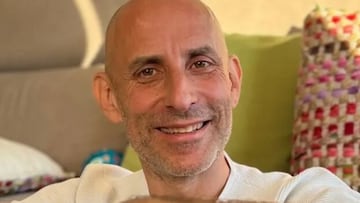

Obesity is now one of the leading public health challenges worldwide and a key risk factor for many chronic diseases. Far from being an individual issue or a matter of willpower, it is a complex condition shaped by biological, social, economic, and environmental factors.
Its steady rise in recent decades, especially among children and adolescents, makes it necessary to rethink how we understand obesity, how we address it, and what responsibilities fall on institutions, the food industry, and society as a whole.
“There are too many vested interests in the food industry, which pressures lawmakers and governments to prevent the implementation of the measures we know are most effective in controlling this pandemic,” explains nutritionist Julio Basulto, who has just published the book ‘Everyone’s Fat (with apologies)’, ‘Todos gordos (con perdón)’.
Basulto adds that, as a society, we are failing by discriminating against people with obesity, which makes it harder to address excess weight appropriately.
“In addition, we diet unconsciously. We know that calorie restriction is a shortcut to obesity and a guarantee of weight regain as Dr. Clotilde Vázquez has explained. We should not be dieting. We should be following a healthy lifestyle with a balanced diet,” Basulto shares.
“We are victims of a food industry with predatory marketing that creates an obesogenic society, where it is easier to eat poorly than to eat well. On top of that, there are economic inequalities, a lack of time, and a lack of resources. Today, calorie for calorie, eating healthy is more expensive than eating unhealthy,” he adds.
The stigma of excess weight
Basulto believes that our society discriminates against and blames people with obesity, even though they are victims of an obesogenic environment. Contrary to popular belief, the idea that obesity is due to a lack of willpower is, according to science, completely false.
“We know that people with obesity follow dietary and nutritional advice and, in fact, show more willpower than people of normal weight. This is well documented, so the claim is false,” Basulto points out. “From an ethical standpoint, it is blaming and absurd. Blaming someone for their obesity is as absurd as blaming a person for being bald, for their height, or for a condition like hypothyroidism.”
“Obesity has physical consequences because health markers are altered, and it has clear effects on mental health: stress, low self-esteem, poorer self-image, and reduced quality of life,” he explains. “In addition, stigma reduces the motivation to seek proper medical, psychological, or nutritional care.”
“Blame does not help. It does exactly the opposite. People with obesity have fewer opportunities to find a partner or a job, face a higher risk of workplace and healthcare discrimination, and are even more likely to be unfairly dismissed,” Basulto continues. “All of this stems from a culture that associates thinness with health, beauty, and personal and professional success.”
Preventing obesity
Basulto also points to three urgent measures to prevent obesity. “First, reduce socioeconomic inequalities. Second, ban the marketing of unhealthy foods aimed at children. Third, impose taxes on unhealthy products, which is a very cost-effective measure.”
“That said, three measures are not enough,” he adds. “If a swimming pool has a hundred holes, plugging only three will not stop it from emptying. Effective strategies are multiple and are supported by leading institutions.”
He also recommends tackling the lack of information. “There is a profound lack of nutritional knowledge among the population, largely driven by the food industry. I call this nutritional agnogenesis: the deliberate creation of ignorance.”
“That ignorance makes us vulnerable to quick fixes and effortless promises,” Basulto cautions. “In addition, there are countless charlatans and influencers who amplify this problem.”
Related stories
Get your game on! Whether you’re into NFL touchdowns, NBA buzzer-beaters, world-class soccer goals, or MLB home runs, our app has it all.
Dive into live coverage, expert insights, breaking news, exclusive videos, and more – plus, stay updated on the latest in current affairs and entertainment. Download now for all-access coverage, right at your fingertips – anytime, anywhere.
Complete your personal details to comment