


Karen Hao, author, discusses the mythology of artificial intelligence: “The best way to understand the AI world is ‘Dune’”
The author spoke recently about her fascinating analogy between artificial intelligence and the story of ‘Dune’.
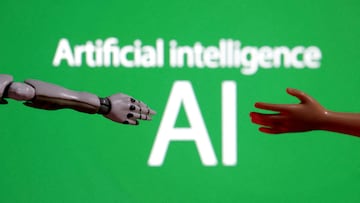

Karen Hao has spent years reporting on OpenAI, first as a journalist at the MIT Technology Review, then as a best-selling author. In her new book, Empire of AI: Dreams and Nightmares in Sam Altman’s OpenAI, she challenges the narratives around ChatGPT and its creators, offering a portrait of how power, myth, and technology intertwine to create a storyline bought by millions.
Hao’s journey began in 2019, when she became the first journalist to penetrate the inner workings of OpenAI. Officially, OpenAI claimed it existed to benefit all humanity. However, privately, its employees had wildly different definitions of what that actually meant.
Writing in Cambridge Day, she said: “I came in with a very open mind, thinking they had a super interesting vision and wanting to learn more about how they operationalised it. I wanted to know what they meant when they said they were working to ensure artificial general intelligence benefits all of humanity, and I very quickly realised that they could not articulate what they actually meant. They could not articulate what AGI was, and they could not articulate what it meant to benefit all of humanity.”
“I found that the AI culture was secretive”
“Different executives and employees I spoke to had totally different interpretations of what they were doing. So that was alarming, and there were a couple of other things that made me start to become really skeptical. They professed that they were really transparent, but I found that their culture was secretive.”
In her interviews, Hao describes how OpenAI was restructuring, and breeding a for-profit arm inside a nonprofit entity, raising capital, and pushing to lead the global race for AGI.
She began to see parallels with empires of the past. These emerging “AI empires,” she argues, operate by claiming resources that are not theirs; namely, people’s data. She draws an analogy between colonial powers and modern AI firms: both extract value from distant communities, pay low wages for essential labour, and assert moral superiority.
As for OpenAI’s leader, Sam Altman, Hao describes how the Frank Herbert book Dune can provide interesting parallels: “I realized that,” she wrote “to draw another analogy to media, the AI world has become “Dune.” In the film, Paul Atreides’ mother creates this mythology around her son to make him powerful and control the people, but the people who encounter the myth don’t know it was a creation, and it gets to the point where even Paul then loses himself in the myth."
Related stories

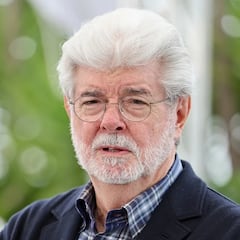
Speaking to Hasan Minhaj’s podcast, Hao was asked whether or not Altman was creating a cult. She responded: “At some point, someone created a mythology around these technologies, and the need to usher it in carefully, very conveniently by the people who created that mythology. And now we are in a situation in which everyone in this ecosystem has forgotten, or has come to believe, or maybe always believed, that this is their sole purpose and that this is what they need to do for the world.”
Get your game on! Whether you’re into NFL touchdowns, NBA buzzer-beaters, world-class soccer goals, or MLB home runs, our app has it all. Dive into live coverage, expert insights, breaking news, exclusive videos, and more – plus, stay updated on the latest in current affairs and entertainment. Download now for all-access coverage, right at your fingertips – anytime, anywhere.
Complete your personal details to comment