


Neither diesel nor nuclear powered: the submarine with AIP-BEST technology practically invisible that can last a month underwater
A one-of-a-kind system allows Spain’s Navy to operate underwater for nearly a month without surfacing, thanks to proprietary technology based on bioethanol and fuel cells.
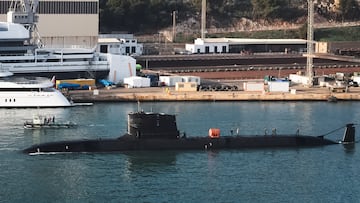
The oceans are central to global geopolitics—and Spain has made its move. The Navy has deployed the S-80 Plus submarine, the only one on the planet that operates without diesel, conventional batteries, or nuclear power. It’s a blend of cutting-edge naval engineering, chemical science, and biofuels: a fuel cell powered by hydrogen, generated onboard from plant-based bioethanol.
Developed by Navantia, the S-80 Plus integrates a unique technology known as AIP-BEST (Bio-Ethanol Stealth Technology), which allows the submarine to stay submerged for up to 28 days without surfacing. This air-independent propulsion system (AIP) gives it the stealth and endurance of a nuclear submarine—but without the associated costs or risks.
Unlike other AIP systems—like the German ones that store highly toxic hydrogen or ethanol, as reported by Motorpasion—the S-80 safely generates its own hydrogen onboard through catalytic reforming of renewable, plant-based bioethanol. This not only reduces the sub’s thermal and acoustic signature, but also avoids the danger of storing compressed hydrogen in a confined, hostile environment like a submarine.
A military breakthrough with South American roots
This breakthrough has its scientific origins in Argentina. In 1991, Miguel Laborde, a researcher with CONICET and professor at the University of Buenos Aires, developed a method to produce hydrogen from ethanol. In 2005, Spanish company Abengoa acquired this method through an agreement with CONICET, aiming to integrate it into fuel cells.
As a result, Spain has created a virtually invisible submarine. The exhaust gases produced during propulsion—mainly carbon dioxide and water vapor—dissolve in seawater as carbonated water, significantly reducing the vessel’s thermal and acoustic trail.
At over 80 meters long and based on the Scorpène-class project—originally co-developed by Navantia and France’s DCNS—the S-80 Plus is now a fully homegrown product with a national patent. After the two shipyards went separate ways in 2009, Spain pursued its independent development, one closely tied to the submarine domain.
Related stories


More than a century after Isaac Peral invented the very concept of the submarine, the Spanish Navy takes a leap forward, repositioning its military strategy amid a global context of rising tensions and uncertainty.
Get your game on! Whether you’re into NFL touchdowns, NBA buzzer-beaters, world-class soccer goals, or MLB home runs, our app has it all.Dive into live coverage, expert insights, breaking news, exclusive videos, and more – plus, stay updated on the latest in current affairs and entertainment.Download now for all-access coverage, right at your fingertips – anytime, anywhere.
Complete your personal details to comment