


Researchers hit on possible formula to restore sight to millions of people
Scientists have developed a regeneration mechanism never seen before, but one that could change eye care forever.
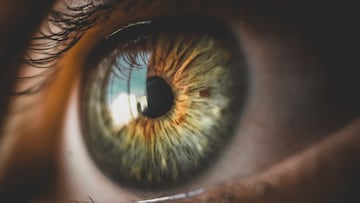
A group of researchers has made significant breakthroughs in retinal regeneration, paving the way for potential new treatments for millions of people affected by retinal degeneration and blindness, according to a report published in Nature.
The entire observation process began with the study of certain animals like the zebrafish, which can naturally regenerate the cells in their retinas. Müller glial cells, which help maintain the structure of the retina, mutate to become nerve cells that replace damaged ones – a process that was previously thought impossible in mammals, until these scientists found the key.
Solution through mice experiments
Humans are unable to regenerate the retina spontaneously after sustaining damage. This has long made the prospect of curing diseases such as retinitis pigmentosa or macular degeneration – which affect more than 300 million people worldwide – extremely difficult.
However, a team of researchers at the Korea Advanced Institute of Science and Technology (KAIST) noticed a special trait in mice that warranted closer examination. During the experiment, scientists progressively removed a protein called PROX1 from the mice – a protein that blocks the restoration of retinal cells.
#Retinal therapy achieves first long-term #NeuralRegeneration in mammals, restoring #Vision in mice by blocking PROX1 protein. This breakthrough offers hope for degenerative retinal disease treatment. @NatureComms https://t.co/qixGjP7IAq https://t.co/dZqW0yYufd
— Medical Xpress (@medical_xpress) April 1, 2025
PROX1 identified as the culprit
The researchers noted the adverse effects triggered by the PROX1 protein, so they decided to block its action. In doing so, they were able to activate retinal regeneration in a mouse suffering from retinitis pigmentosa. The effects in the mammal lasted for six months, leading the scientists to declare this the first successful experiment in neuronal regeneration of the retina in mammals.
“In many animal tissues that contain stem cells, damaged cells are replaced by new ones, allowing these tissues to maintain their function despite the progressive loss of cells,” the group of scientists stated.
Related stories
Get your game on! Whether you’re into NFL touchdowns, NBA buzzer-beaters, world-class soccer goals, or MLB home runs, our app has it all.
Dive into live coverage, expert insights, breaking news, exclusive videos, and more – plus, stay updated on the latest in current affairs and entertainment. Download now for all-access coverage, right at your fingertips – anytime, anywhere.
Complete your personal details to comment