


Saint Thomas Aquinas, thinker and philosopher: “If a captain’s highest objective were to preserve his ship, he would keep it in port forever”
Although the philosopher’s doctrine, a pioneering force in the development of rational thought in Europe, is dense, it still offers practical lessons that apply to everyday life.
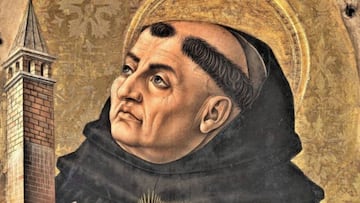
Among the many currents that feed the philosophical river shaping modern Western thought, the doctrine of Saint Thomas Aquinas is undoubtedly one of the most substantial.
This 13th-century medieval philosopher and theologian stands as a central figure of Scholasticism and as one of the clearest representatives of an idea later developed by many other thinkers: that reason has value in its own right, even within faith itself.
In other words, Saint Thomas Aquinas helped lay some of the earliest foundations for the development of rational thought in Europe.
There are so many quotations that capture his thinking that it is difficult to choose one that stands above the rest, especially given the many dimensions of his philosophy. At its core, as mentioned above, his thought can be summarized through the relationship between faith and reason: they do not contradict one another because both come from God.
Reason can arrive at certain truths on its own, while faith reveals higher truths. From this, he concluded that reason prepares the way for faith, and faith, in turn, perfects reason. Above all, this is the foundation of his famous Five Ways for demonstrating the existence of God.
St. Thomas Aquinas was one of the great liberators of the human intellect…who reconciled religion with reason, who expanded it towards experimental science, who insisted that the senses were the windows of the soul and that the reason had a divine right to feed upon facts, and… pic.twitter.com/Iki45VwQmb
— Catholic Arena (@CatholicArena) January 28, 2026
Nothing ventured, nothing gained
Still, despite the complexity of his ideas, not all of Saint Thomas Aquinas’s philosophy can, or should, be understood only within such an abstract framework. His ideas can be applied quite naturally to ordinary, everyday concerns, and many of his most popular quotations show exactly that.
In this respect, one of the best examples may be the following line: “If a captain’s highest goal were to preserve his ship, he would keep it in port forever.”
From a strictly philosophical standpoint, the quote aligns perfectly with his teleology, his virtue ethics, and his understanding of humanity’s ultimate end. Put another way, his doctrine suggests that choosing not to live fully out of fear of loss is already a kind of failure to fulfill one’s purpose. In even more practical terms, the quote reminds us that those who never take risks are unlikely to achieve the outcomes they hope for. Nothing ventured, nothing gained.
In this example, we can see the dual nature of his thought, which is capable of both explaining the relationship between faith and reason and offering advice to a close friend about any personal endeavor. It is no coincidence that Saint Thomas is considered one of the fathers of Western philosophy: his ideas find their way into everyday life almost without us noticing.
Related stories
Get closer to the game! Whether you like your soccer of the European variety or that on this side of the pond, our AS USA app has it all. Dive into live coverage, expert insights, breaking news, exclusive videos, and more. Plus, stay updated on NFL, NBA and all other big sports stories as well as the latest in current affairs and entertainment. Download now for all-access coverage, right at your fingertips – anytime, anywhere.
And there’s more: check out our TikTok and Instagram reels for bite-sized visual takes on all the biggest soccer news and insights.
Complete your personal details to comment