


Scientists discover a passing star may cause Earth to collide with another planet in the Solar System
A passing star has been discovered that could cause chaos in the Solar System, sending Earth flying out of orbit.
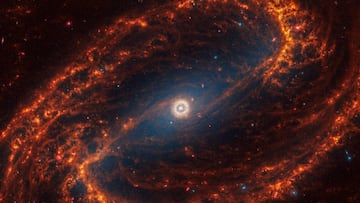

I’m still waiting for the good news about the Cosmos. Every time I click on something, it’s deadly. I want ‘Space’s Largest Carrot Found on Mars’, not ‘Fatal Earth-Eating Asteroid Set To Collide With Your Home City.
Unfortunately, dear reader, this story is the latter.
Scientists have discovered a runaway star that could have catastrophic effects on our finely balanced Solar System, potentially running riot and disturbing the orbits of more than just Earth.
ScienceNews.com reports that Nathan Kaib, an astronomer at the Planetary Science Institute who is based in Iowa, and Sean Raymond, an astronomer at the University of Bordeaux in France, submitted work to arXiv.org May 7 that described Mercury’s already wonky orbit causing chaos if shifted out of line by a star coming our way.
If you watch long enough, a comet will appear. Before then, you will see our Solar System from inside the orbit of Mercury as recorded by NASA's Parker Solar Probe looping around the Sun. The video captures coronal streamers into the solar wind, a small Coronal Mass Ejection, and… pic.twitter.com/fzJ2H88Swf
— Astronomy Picture of the Day (@apod) April 2, 2025
The most dangerous stars are, according to Kaib, the ones that come less than 100 times as far from the sun as Earth is, something his data gives a 5 percent chance of happening. He adds that the riskiest stars are the ones that move slowly, at less than 10 kilometres per second relative to the sun, as it increases the time that their gravitational force has on the planets around it.
A chain reaction could ensue that would see the four rocky planets inside the Asteroid Belt - Mercury, Venus, Earth & Mars - potentially flung out of the Solar System.
But do not worry, this is not a probable scenario. The Earth will likely be burned to a crisp by the expanding Sun way before that. In fact, over the next 5 billion years, the Sun’s projected lifespan, the chance of such a catastrophe affecting Earth is only 0.2 percent, based on the number of stars passing near the solar system. It’s not zero, but it’s not as bad as another member of our community.
This is where Pluto comes in, and it’s not just Neil deGrasse Tyson who appears to have it in for the icy body. Kaib’s data suggests that Pluto’s positioning and its orbit relative to Uranus and Neptune means that the chances of a stellar body affecting its orbit is as high as 4%, 20 times greater than Earth’s chances of destruction.
Related stories

“But once you allow stars to alter the solar system and push things around, you can actually knock Pluto out of its resonance with Neptune,” Kaib says. Lets hope the poor Plutonians have built their disaster shelters and have a lot of tinned food stocked up.
Get your game on! Whether you’re into NFL touchdowns, NBA buzzer-beaters, world-class soccer goals, or MLB home runs, our app has it all. Dive into live coverage, expert insights, breaking news, exclusive videos, and more – plus, stay updated on the latest in current affairs and entertainment. Download now for all-access coverage, right at your fingertips – anytime, anywhere.
Complete your personal details to comment