


Scientists discover new clues in Einstein’s brain that could explain his thinking abilities
The study shows the presence of an additional fold in the frontal lobe of the scientist’s brain.
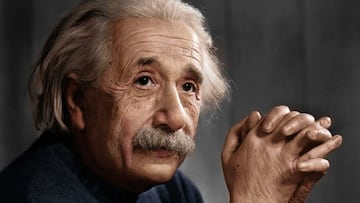
Albert Einstein transformed modern physics and challenged the legacy of Isaac Newton himself. Throughout his years of study and research, he demonstrated what is widely considered one of the most extraordinary minds in human history. For that reason, after his death in 1955, pathologist Thomas Harvey removed and preserved his brain for scientific study. That decision later allowed researchers around the world to investigate how his mind may have worked.
One of those investigations was a 2013 study published in the journal Brain, which found that Einstein had a thicker corpus callosum. This structure lies deep within the brain and connects the two cerebral hemispheres, left and right, while helping coordinate their functions. A thicker corpus callosum could suggest a greater exchange of information between logical thinking, typically associated with the left hemisphere, and more visual or creative thinking, often linked to the right.
That finding was followed by research from neuroscientist Frederic Lepore, based on photographic analysis. His study identified an additional fold in the frontal lobe of Einstein’s brain. This region is responsible for planning and complex thought processes. Still, despite the unusual structural differences found in Einstein’s brain compared with the average brain, scientists caution that it is not possible to establish a direct link between brain structure and intelligence. Although his unique anatomy may have contributed to his remarkable thinking abilities, current research does not confirm that conclusion.
Pathologist Thomas Harvey holding a jar containing part of Albert Einstein’s brain.
— Massimo (@Rainmaker1973) December 2, 2024
Harvey performed an autopsy on Einstein in 1955, and kept the brain for 40 years. pic.twitter.com/Cp0Nqt10Hp
A musician’s motor cortex
Among the most influential scientific publications on Einstein’s brain is a 1985 study by neuroscientist Marian Diamond. Her research found that the upper region of the brain, which is involved in abstract thinking and information processing, contained a higher number of glial cells. These non-neuronal cells in the nervous system help nourish, support, protect, and insulate neurons, which may help explain why Einstein’s neurons were especially active.
Another major discovery came from Sandra Witelson’s research team. According to their study, Einstein’s parietal lobes were approximately 15% wider than those of other individuals. The same research also found that the shape of his Sylvian fissure was unique, which may have been related to more efficient communication between neurons.
That work was followed by a study from anthropologist Dean Falk, who focused on Einstein’s motor cortex. This area of the frontal lobe is responsible for planning, controlling, and carrying out body movements. According to Falk, Einstein’s motor cortex resembled that of musicians. This observation, together with the fact that Einstein played the violin, suggests that the brain changes through experience.
Related stories
Get closer to the game! Whether you like your soccer of the European variety or that on this side of the pond, our AS USA app has it all. Dive into live coverage, expert insights, breaking news, exclusive videos, and more. Plus, stay updated on NFL, NBA and all other big sports stories as well as the latest in current affairs and entertainment. Download now for all-access coverage, right at your fingertips – anytime, anywhere.
And there’s more: check out our TikTok and Instagram reels for bite-sized visual takes on all the biggest soccer news and insights.
Complete your personal details to comment