


Scientists discover the culprit that killed over 5 billion sea stars: “It’s really quite gruesome”
Researchers have discovered the cause of a hugely troubling problem involving the death of billions of starfish.
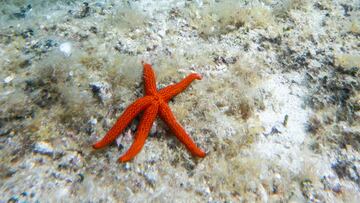

In a major scientific breakthrough reported on August 4, 2025, researchers believe they have finally solved the mystery behind a devastating epidemic that wiped out more than 5 billion sea stars along the Pacific coast of North America—from Mexico up to Alaska.
The decade‑long die-off struck hardest between 2013 and 2015, affecting over 20 species. Among the victims was the sunflower sea star (Pycnopodia helianthoides), which saw up to 90% population loss in its first five years of decline.
The culprit turned out not to be a virus, as once suspected, but a bacterium: Vibrio pectenicida, discovered inside the animals. This disease, known as sea star wasting syndrome, manifests with white lesions, swelling, limb detachment, and ultimately tissue decay. Victims can disintegrate into a mushy blob in mere days. As marine disease ecologist Alyssa Gehman described it, the affliction is “really quite gruesome,” with arms literally falling off.
The ecological fallout has been severe. With the loss of sea stars to prey on sea urchins, urchin numbers exploded—causing almost 95% kelp forest decline in parts of Northern California. Since kelp forests are the “rainforests of the ocean,” supporting fish, sea otters, seals, and more, the collapse has rippled through the ecosystem.
Microbiologist Blake Ushijima of the University of North Carolina, Wilmington said that “it’s incredibly difficult to trace the source of so many environmental diseases, especially underwater,” adding that the findings were “really smart and significant.”
“They’ve done a great job. They deserve much credit for trying to interpret very complex data,” added Ian Hewson, a marine ecologist at Cornell University who was not involved with the work.
Get your game on! Whether you’re into NFL touchdowns, NBA buzzer-beaters, world-class soccer goals, or MLB home runs, our app has it all. Dive into live coverage, expert insights, breaking news, exclusive videos, and more – plus, stay updated on the latest in current affairs and entertainment. Download now for all-access coverage, right at your fingertips – anytime, anywhere.
Complete your personal details to comment