


Scientists dive miles below the surface and emerge with three new species:“I was incredibly surprised”
The snailfish is one of the deepest-living marine species in the ocean, and there is still much to discover about them.
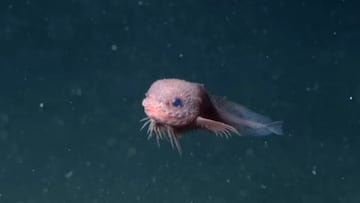
Scientists have identified a new species of snailfish in a recent study, after it was spotted in 2019 several miles below the ocean’s surface. Snailfish are known for inhabiting the deep sea, and one species currently holds the record for living at the greatest depth ever recorded.
Although more than 400 different species of snailfish are already known, the study adds three new discoveries to that list: the rough snailfish (Careproctus colliculi), which is pink in color; the dark snailfish (C. yanceyi); and the smooth snailfish (Paraliparis em), the latter two both black.
Mackenzie Gerringer, the study’s lead author and an associate professor of biology at the State University of New York at Geneseo, told IFLScience how surprising these new specimens were. “Two of these specimens are black snailfish collected on the same dive by the submersible Alvin – I was incredibly surprised by how different these two individuals were,” she said.
The two fish were strikingly different both morphologically and genetically. The fact that two previously unknown snailfish species were collected in the same location, during the same dive, in one of the most extensively studied marine regions in the world underscores just how much there is still to learn about our planet.
The fish were documented in photographs and videos by a team of scientists working with the Monterey Bay Aquarium Research Institute (MBARI), footage that can now be viewed.
The differences between species
As seen in the video, the pink rough snailfish has surprisingly “adorable” features for a deep-sea creature and looks very different from the dark and smooth snailfish. Scientists explain that color does not distinguish species at these depths. “There’s no sunlight at these depths, so color loses its importance for camouflage,” Gerringer explained.
“It’s likely that these snailfish communicate with each other and with their environment through other means, particularly by sensing vibrations in the water and by smelling and tasting their surroundings.” The study also notes that, despite the absence of sunlight in the deep sea, flashes of bioluminescence were observed.
“For me, finding species that appear so fragile thriving in these habitats highlights the beauty of the deep ocean and our responsibility to understand and protect these incredible ecosystems,” the study’s lead author concluded to IFLScience.
Related stories
Get your game on! Whether you’re into NFL touchdowns, NBA buzzer-beaters, world-class soccer goals, or MLB home runs, our app has it all.
Dive into live coverage, expert insights, breaking news, exclusive videos, and more – plus, stay updated on the latest in current affairs and entertainment. Download now for all-access coverage, right at your fingertips – anytime, anywhere.
Complete your personal details to comment