


Scientists record mysterious blue electrical sparks above treetops during storms for the first time
A team from Penn State has documented in the wild the elusive electrical coronas that for nearly a century had only been hypothesized.
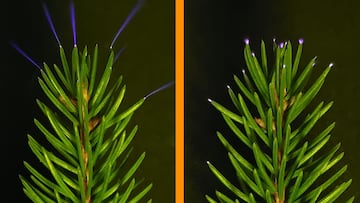
For almost a century, scientists suspected that thunderstorms might produce tiny electrical discharges above the tops of trees. Now, a team from Pennsylvania State University has achieved what once seemed impossible: capturing in the wild the ghostly blue sparks known as coronas flickering above trees during real storms along the eastern coast of the United States.
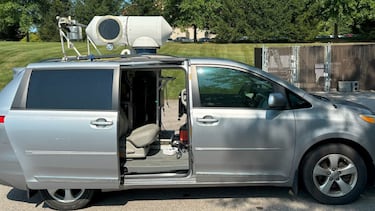
The study, published this month in Geophysical Research Letters, describes an investigation that combined field meteorology with improvised engineering. Lead author Patrick McFarland and his team turned a minivan into a mobile laboratory.
They outfitted a 2013 Toyota Sienna with a weather station, electric field detectors, a laser rangefinder, and a roof-mounted periscope that directed light into a highly sensitive ultraviolet camera.
The UV camera was the key to the experiment. Although storms darken the sky, there is still enough ambient light to hide the faint visible glow of coronas from the naked eye.
Only by observing the ultraviolet spectrum were researchers able to isolate these nearly invisible sparks. To install the equipment, the group removed one of the van’s seats and cut an opening roughly 30 centimeters wide in the roof of the vehicle, sacrificing any resale value in the name of science.
Electrical coronas may have influenced tree evolution for millennia
During the summer of 2024, the researchers chased storms from Florida to Pennsylvania. In Pembroke, North Carolina, they aimed their instruments at a sweetgum tree while a storm discharged over the area.
In just 90 minutes, they recorded 41 coronas at the tips of its leaves. The flashes, which could last up to three seconds, appeared to jump from one leaf to another. The team also detected similar discharges in a nearby loblolly pine and during four other storms involving different tree species.
The phenomenon occurs when the electrical charge of a storm induces an opposite charge in the ground. That energy rises toward the highest available point, usually the tips of leaves, and is released as faint ultraviolet sparks. According to the team’s estimates, dozens or even hundreds of leaves in the crown of a single tree could emit coronas simultaneously during an intense storm.
Beyond the visual spectacle, the scientific implications are significant. In laboratory experiments, these discharges have been shown to scorch leaf tips within seconds. Previous studies by the same group also demonstrated that coronas generate hydroxyl radicals, compounds that help cleanse the atmosphere of gases such as methane, though they can also contribute to the formation of ozone and aerosols.
The new research opens the door to studying whether these repeated discharges, over thousands of years, may have influenced the evolution and morphology of trees. After decades of speculation, direct evidence now confirms that this invisible electrical display is a real part of forest dynamics during thunderstorms.
Related stories
Get closer to the game! Whether you like your soccer of the European variety or that on this side of the pond, our AS USA app has it all. Dive into live coverage, expert insights, breaking news, exclusive videos, and more. Plus, stay updated on NFL, NBA and all other big sports stories as well as the latest in current affairs and entertainment. Download now for all-access coverage, right at your fingertips – anytime, anywhere.
And there’s more: check out our TikTok and Instagram reels for bite-sized visual takes on all the biggest soccer news and insights.
Complete your personal details to comment