Science

Scientists reveal how Antarctic lakes work

A pioneering study reveals that the freshwater lakes of Deception Island are actually connected to the sea through the subsoil and react to the tides.
Please translate the following article from Spanish to American English improving the grammar and flow. Additionally, do not use “em dashes”.
Científicos españoles desvelan cómo funcionan los lagos de la Antártida
Un estudio pionero del CSIC descubre que los lagos de agua dulce de la isla Decepción no están aislados, sino que se conectan con el mar a través del subsuelo y reaccionan a las mareas.
Un equipo de científicos españoles acaba de resolver uno de los grandes misterios del continente helado. Hasta ahora, el comportamiento del agua subterránea en la Antártida era un terreno prácticamente desconocido, pero un nuevo estudio liderado por el Consejo Superior de Investigaciones Científicas (CSIC) ha logrado cartografiar cómo funciona el laberinto de agua que da vida a los lagos de la isla Decepción.
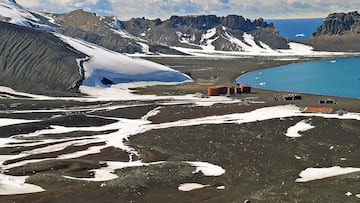
Estos lagos, situados en el fondo de cráteres volcánicos cerrados, no son balsas de agua aisladas. En realidad, están conectados directamente con el océano a través del subsuelo y su nivel llega a reaccionar al ritmo de las mareas, un comportamiento rarísimo en este tipo de entornos polares.
El terreno funciona como una esponja gigante
El trabajo, encabezado por el investigador Jorge Jódar del Instituto Geológico y Minero de España (IGME-CSIC) y basado en datos de las campañas de 2024 y 2025, detalla que el secreto está en la propia tierra de la isla. El terreno está formado por sedimentos volcánicos que son extremadamente permeables. Actúan como una esponja, logrando filtrar hacia el subsuelo un 41% de toda el agua que cae, sobre todo gracias al deshielo del verano.
Los investigadores han descubierto que debajo del hielo existen dos acuíferos interconectados. El primero es más superficial, depende de la época del año y está ligado al permafrost (la capa de suelo permanentemente congelado). El segundo es mucho más profundo, el agua circula por él con gran facilidad y es el que conecta de forma permanente con el mar. Este circuito subterráneo continuo es el que permite que el agua de los lagos se mantenga dulce a pesar de estar tan cerca de la costa marina.
Una herramienta para medir el calentamiento global
La isla Decepción es, a ojos de los científicos, un laboratorio natural único donde conviven volcanes activos, glaciares y permafrost. Para entender sus acuíferos, han logrado vincular por primera vez la altitud con la composición química de la nieve y la lluvia. Al cruzar estos datos, no solo han descubierto el origen exacto del agua que alimenta los lagos, sino que ahora pueden interpretar con mucha más precisión los antiguos registros del clima que llevan milenios ocultos en el hielo.
Toda esta información es imprescindible para anticipar cómo va a reaccionar el suelo antártico ante el calentamiento global y la degradación progresiva de ese terreno permanentemente helado. Todo el trabajo de campo y los datos recopilados han servido para que el CSIC marque un antes y un después en la ciencia polar al dar forma a un método de análisis pionero que ya se puede aplicar para desentrañar los secretos de muchas otras zonas inexploradas de la Antártida.
wikimedia commons

A team of Spanish scientists has just solved one of the great mysteries of the frozen continent. Until now, the behavior of groundwater in Antarctica was largely unknown. However, a new study led by the CSIC has successfully mapped how the hidden network of water sustaining the lakes on Deception Island actually functions.

These lakes, located at the bottom of enclosed volcanic craters, are not isolated pools of water. In reality, they are directly connected to the ocean through the subsurface, and their water levels rise and fall with the tides. This is an extremely rare phenomenon in polar environments.

The ground acts like a giant sponge

The research, led by Jorge Jódar of the Geological and Mining Institute of Spain (IGME-CSIC) and based on data collected during the 2024 and 2025 expeditions, shows that the key lies in the island’s geology. The terrain is made up of highly permeable volcanic sediments that act like a sponge, allowing 41 percent of all incoming water to filter underground, mainly due to summer ice melt.
Scientists reveal how Antarctic lakes work
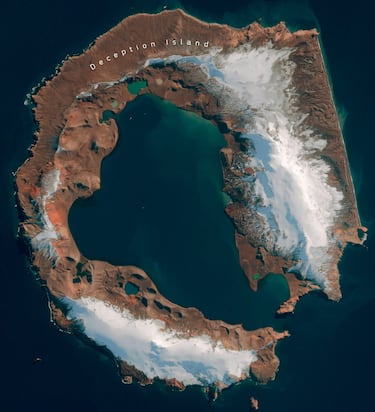
Vista satelital de la isla DecepciónWikimedia C

Researchers discovered that beneath the ice there are two interconnected aquifers. The first is shallow, seasonal, and linked to permafrost, the permanently frozen layer of soil. The second is much deeper, allows water to flow more freely, and maintains a constant connection to the sea. This continuous underground circulation helps keep the lake water fresh despite their proximity to the ocean.

A tool for measuring global warming

To scientists, Deception Island is a unique natural laboratory where active volcanoes, glaciers, and permafrost coexist. To better understand its aquifers, researchers have, for the first time, linked elevation with the chemical composition of snow and rainfall. By combining these data, they have not only identified the precise origin of the water feeding the lakes, but can now interpret ancient climate records preserved in the ice with far greater accuracy.

All of this information is essential for predicting how Antarctic soils will respond to global warming and the gradual degradation of permafrost. The fieldwork and data collected have enabled the CSIC to establish a major milestone in polar science by developing a pioneering analytical method that can now be used to uncover the secrets of many other unexplored regions of Antarctica.

Related stories

Get closer to the game! Whether you like your soccer of the European variety or that on this side of the pond, our AS USA app has it all. Dive into live coverage, expert insights, breaking news, exclusive videos, and more. Plus, stay updated on NFL, NBA and all other big sports stories as well as the latest in current affairs and entertainment. Download now for all-access coverage, right at your fingertips – anytime, anywhere.

And there’s more: check out our TikTok and Instagram reels for bite-sized visual takes on all the biggest soccer news and insights.

Tagged in:
Comments
Rules

Complete your personal details to comment

We recommend these for you in Latest news