


So tiny telescopes missed it: Astronomers discover a 6-mile-wide mini-moon orbiting Uranus
Once again, the power of the James Webb Space Telescope continues to surprise scientists.
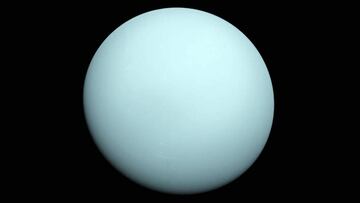

The incredible marvels that the James Webb telescope continues to unearth to us for us puny humans doesn’t seem like slowing down: and this time, it’s pulled off perhaps the best one yet.
In February 2025, NASA’s JWST turned its gaze to Uranus and unveiled something remarkable: a brand-new moon circling the icy planet. This tiny companion, now officially known as S/2025 U1, was captured using Webb’s Near-Infrared Camera (NIRCam) during a set of long-exposure images, bumping up the official count to 29.
Named S/2025 U1 for now, this moon still awaits an official moniker from the International Astronomical Union (IAU). At present, all of the moons around Uranus are named after characters from Shakespeare and Alexandra Pope.
Discovery hints at “chaotic” history of planet
The discovery was revealed over a span of six hours on February 2, 2025, when Webb recorded ten 40-minute exposures. These images were carefully stitched together to better view Uranus’s atmospheric features, its rings, and the faint glow of its moons.
At just about 10 km (6 miles) in diameter, S/2025 U1 is incredibly small as far as moons go; it’s so tiny that Voyager 2, which flew past Uranus over 38 years earlier, didn’t have the technological capacity to spot it.
What makes this moon particularly intriguing is its orbit. Positioned roughly 56,000 km from Uranus’s centre, it lives between the orbits of the moon Ophelia (just outside Uranus’s main ring system) and Bianca.
“No other planet has as many small inner moons as Uranus, and their complex inter-relationships with the rings hint at a chaotic history that blurs the boundary between a ring system and a system of moons,” explained Matthew Tiscareno, a member of the research team.
🌚 @NASAWebb spotted something new around Uranus.
— NASA (@NASA) August 20, 2025
A previously unknown moon was discovered circling the planet, expanding its orbital family to 29: https://t.co/7Aa0dEBL7q pic.twitter.com/JspZlciNHl
“Moreover, the new moon is smaller and much fainter than the smallest of the previously known inner moons, making it likely that even more complexity remains to be discovered," he concluded.
Related stories


Get your game on! Whether you’re into NFL touchdowns, NBA buzzer-beaters, world-class soccer goals, or MLB home runs, our app has it all. Dive into live coverage, expert insights, breaking news, exclusive videos, and more – plus, stay updated on the latest in current affairs and entertainment. Download now for all-access coverage, right at your fingertips – anytime, anywhere.
Complete your personal details to comment