


The architectural colossus that needs to melt 13,000 tons of ice a day to cool in the middle of the desert
A sophisticated cooling system combats Dubai’s extreme heat from the 828-meter height of the world’s tallest building.
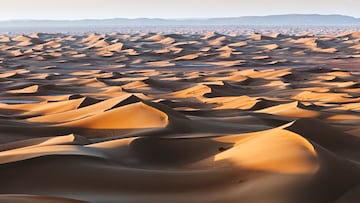
In the heart of the Arabian Desert, where temperatures often soar above 40°C, the world’s tallest building—the Burj Khalifa—not only defies gravity with its 828-meter height, but also withstands extreme heat thanks to one of the most advanced and innovative air conditioning systems on the planet. To maintain a comfortable indoor temperature of 24°C, the skyscraper requires the cooling equivalent of melting 13,000 tons of ice every single day.
While this may sound like a massive energy drain, it’s actually a triumph of efficient and sustainable engineering. The Burj Khalifa’s air conditioning is powered by an external district cooling plant, which also serves luxury developments such as the Dubai Mall. This plant circulates water chilled to just 3.3°C through 75-centimeter-wide pipes that run directly to the building’s basement.
Tom Cruise casually sitting on the top of Burj Khalifa without a harness during the filming of Mission Impossible: Ghost Protocol, 2011 pic.twitter.com/TVeYPEYo4q
— Cinema Scene (@CinemaScene404) June 18, 2025
But where does this chilled water come from? The answer lies in artificial ice and treated wastewater. Since its conception in 2004 and inauguration in 2010, the Burj Khalifa has relied on a Thermal Storage System (TSS), which uses a substance known as ice slurry—a mixture of water and ice crystals—produced at night when electricity rates are lower. During the day, this “liquid ice” melts and cools the building, cutting electricity usage by up to 40%.
To further reduce reliance on potable water—especially crucial in a region where freshwater is scarce—the system uses treated sewage effluent (TSE). This wastewater undergoes advanced purification before being reused in the cooling cycle.
And remarkably, the building also creates water in the desert. As humid air condenses on the system’s cold coils, the Burj Khalifa captures nearly 57 million liters of water annually. This pure condensate isn’t wasted—it’s collected in an underground reservoir and repurposed to irrigate the surrounding gardens, transforming a byproduct into an environmentally friendly solution.
The entire system is managed by a Honeywell automation platform, which integrates thousands of sensors to monitor temperature, humidity, and pressure in real time. Thanks to artificial intelligence, the system can perform predictive maintenance, identifying and addressing issues before they arise—reducing repair time by up to 40%.
It also tackles the “chimney effect,” a common issue in tall buildings, by maintaining a slightly positive internal air pressure. This prevents hot air infiltration and minimizes wind noise, ensuring both thermal and acoustic comfort at every level.
What building made you say “wow” in person?
— Travolax | Travel & Destinations (@travolax) June 17, 2025
— Burj Khalifa, Dubai 🌟 pic.twitter.com/oEdsCHQKNf
Related stories


Ultimately, the Burj Khalifa’s air conditioning system does more than cool the world’s tallest building—it showcases a forward-thinking, sustainable approach to living in extreme environments, blending innovation, efficiency, and environmental respect right in the middle of the desert.
Get your game on! Whether you’re into NFL touchdowns, NBA buzzer-beaters, world-class soccer goals, or MLB home runs, our app has it all. Dive into live coverage, expert insights, breaking news, exclusive videos, and more – plus, stay updated on the latest in current affairs and entertainment. Download now for all-access coverage, right at your fingertips – anytime, anywhere.
Complete your personal details to comment