


The Chinese military’s mosquito-sized micro-drone with “wings” and “legs” that can perform missions on and off the battlefield
China has unveiled mosquito-sized military drones capable of stealth surveillance.
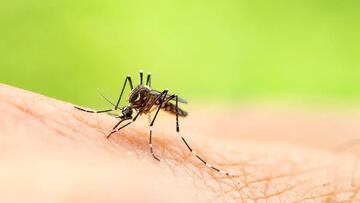

The future is here, and the robots really are taking over. China’s National University of Defence Technology (NUDT) has introduced a new class of ultra‑small, mosquito‑sized drones designed for reconnaissance and swarm operations.
“Here in my hand is a mosquito-like type of robot. Miniature bionic robots like this one are especially suited to information reconnaissance and special missions on the battlefield,” Liang Hexiang, a student at NUDT, during a CCTV segment, holding the drone delicately between his fingers.
The tiniest variant weighs only around 90 g and can be hand‑launched, featuring miniaturised cameras that transmit real‑time surveillance feeds. These drones are designed for swarm tactics: dozens or even hundreds can be deployed simultaneously to overwhelm enemy defences and provide coverage over large areas.
The Chinese military unveils a tiny drone the size of a mosquito.
— Alexeï (@jeanlol67573289) June 21, 2025
The creators believe such a drone is nearly impossible to detect, making it ideal for reconnaissance. A compact handheld device is all that's needed for control.
China is ahead of the rest of the world... pic.twitter.com/thfCzIcchy
Futurism says that between 2022 and 2023, China installed over half of all global robotics installed throughout the globe, highlighting the priority they are giving to technology production; they now have over 450,000 individual robotics firms across the country.
But it’s not only the Chinese who are working hard on miniature drones. Harvard previously unveiled a RoboBee micro-UAV, that uses flapping “wings” and can transition from water to air. Norway, for its part, has the palm-sized Black Hornet Nano drone, with similar capabilities.
Speaking at the time, postdoctoral researcher Alyssa Hernandez said that “RoboBee is an excellent platform to explore the interface of biology and robotics”, adding that “seeking bioinspiration within the amazing diversity of insects offers us countless avenues to continue improving the robot. Reciprocally, we can use these robotic platforms as tools for biological research, producing studies that test biomechanical hypotheses.”
Related stories


The Colorado River in danger of deadpool?
British newspaper The Independent reports that “since 2006, the Department of Defense’s secretive DARPA lab has also been working on hybrid insect drones, which embed tiny electronics into real insects” and “these cyborg insects can be controlled via electrical impulses, allowing cockroaches and beetles to be used for surveillance purposes.”
Get your game on! Whether you’re into NFL touchdowns, NBA buzzer-beaters, world-class soccer goals, or MLB home runs, our app has it all. Dive into live coverage, expert insights, breaking news, exclusive videos, and more – plus, stay updated on the latest in current affairs and entertainment. Download now for all-access coverage, right at your fingertips – anytime, anywhere.
Complete your personal details to comment