


The company that brought dire wolves back has a new de-extinction target: A 12-foot bird that disappeared 600 years ago
Colossal Biosciences has announced that it is aiming to bring back one of the nine flightless birds wiped out after humans arrived in New Zealand.

Humanity is witnessing the ‘sixth mass extinction’ event unfolding before our eyes and driven primarily by us. So, it might seem a bit odd to dedicate immense resources to bringing back from the dead species that disappeared thousands or even just hundreds of years ago.
However, that is just what genetic engineering startup Colossal Biosciences has in mind. A few months ago, they announced that they’d resurrected the dire wolf that hasn’t roamed the Earth in around 13,000 years. And just recently they added another species to their list of creatures to bring back from the great beyond.
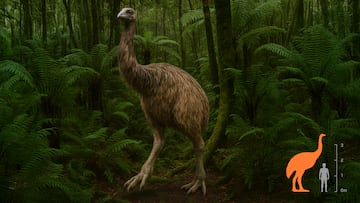
South Island Giant Moa: a 12-foot bird that disappeared 600 years ago
The Texas-based biotech company says that it is working to de-extinct the South Island Giant Moa in conjunction with the Ngāi Tahu Research Centre and Sir Peter Jackson as well as revive the other eight extinct Taonga species. The South Island Giant Moa went extinct roughly 600 years ago, not long after the first Polynesian settlers colonized New Zealand along with all of the eight other giant flightless birds that once inhabited the islands.
These 12-foot giant herbivores, that could weigh up to 510 pounds, formed an important part of the ecosystem spreading seeds and controlling vegetation within their habitats. However, they were unaccustomed to predators and quickly fell victim to humans overhunting, a common occurrence the world over on islands.
Doubts raised about importance of saving extinct bird versus conserving existing species
While their efforts have cheerleaders, there are also detractors who would like to see more resources dedicated to conservation. However, the indigenous-led scientific collaboration says that these efforts are being made with the idea in mind to use the knowledge gained along with the mātauranga Māori (traditional knowledge) to help conserve those creatures that are still among us but in peril and the wider ecosystem.
“By studying ancient DNA, we can gain insights into how these keystone species shaped New Zealand’s unique biodiversity and apply these lessons to strengthen the resilience of modern ecosystems facing climate change and habitat loss,” said Colossal’s Chief Science Officer Dr. Beth Shapiro in a press release.
Related stories

Get your game on! Whether you’re into NFL touchdowns, NBA buzzer-beaters, world-class soccer goals, or MLB home runs, our app has it all.
Dive into live coverage, expert insights, breaking news, exclusive videos, and more – plus, stay updated on the latest in current affairs and entertainment. Download now for all-access coverage, right at your fingertips – anytime, anywhere.
Complete your personal details to comment