


The mystery solved: This mummy remained perfectly preserved for centuries, and now scientists know why
A huge secret regarding a mysterious mummy nicknamed the “air-dried chaplain” has been discovered.
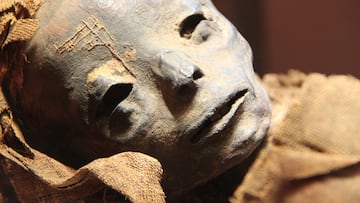

Researchers have resolved a centuries-old mystery surrounding a mummified priest found in the church crypt of St. Thomas am Blasenstein, Austria.
Previously believed to be naturally preserved and dubbed the “air-dried chaplain,” the remains are now identified as those of Franz Xaver Sidler von Rosenegg, an aristocratic vicar who died between 35 and 45 years of age between 1734 and 1780.
Dr. Andreas Nerlich and his team from Ludwig Maximilian University of Munich conducted a partial autopsy and CT scans, revealing that the body was embalmed through an unconventional method: via the rectum.
‘The only entrance possible was the rectum’
The abdominal and pelvic cavities were filled with absorbent materials such as wood chips, twigs, hemp, silk, and zinc chloride, without any external incisions. This technique is, perhaps unsurprisingly, unprecedented, and suggests that similar methods might have been more common than previously thought. Dr Andreas Nerlich, a pathologist at Ludwig Maximilian University of Munich said that “the body wall was not opened” adding, rather grimly, that “therefore the only entrance possible was the rectum.” The embalming materials included a glass bead, initially suspected to be a poison capsule.
Analysis of bone, tooth, and skin samples indicated a diet rich in animal products and Central European grains, consistent with a local parish vicar’s calm and stress-free lifestyle as a man of the cloth. Physical evidence, such as bunions thanks to his priest shoes and signs of long-term pipe smoking, further supported this identification.
Scientists say that the most likely cause of death for Mr. Sidler von Rosenegg was severe pulmonary bleeding due to tuberculosis.
As for the exact reason why those burying him decided upon the unique embalming method is still speculation, although it has been suggested that going in that way may have been intended to minimise infection risks or to preserve the body for transport to his home monastery. “This is the first case with this type of documented embalming,” Nerlich said. “So we have no idea how often or where this has been performed, although we assume that this type of ‘short-term preservation’ was used much more often than we might expect from this single case.”
Related stories


Get your game on! Whether you’re into NFL touchdowns, NBA buzzer-beaters, world-class soccer goals, or MLB home runs, our app has it all. Dive into live coverage, expert insights, breaking news, exclusive videos, and more – plus, stay updated on the latest in current affairs and entertainment. Download now for all-access coverage, right at your fingertips – anytime, anywhere.
Complete your personal details to comment