


What area of the brain do you use to make decisions? A new study challenges long-held beliefs
Step by step, scientists are edging closer to a deeper understanding of how our grey matter works.
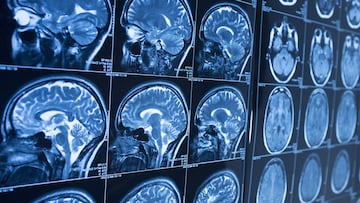

The brain trying to find out how itself works is perhaps the greatest mind-bending fact within the walls of the known Universe.
Now, a groundbreaking study has unveiled a comprehensive map of brain activity during decision-making in mice, offering unprecedented insights into how our brains process choices.
This research, led by the International Brain Laboratory (IBL), involved an international collaboration of neuroscientists from 12 laboratories across Europe and the United States.
“Nobody had ever attempted to do something like this before”
Using advanced technology, the team recorded the activity of over half a million neurones across 279 brain regions in 139 mice. The findings, published in the journal Nature, reveal that decision-making is not confined to a single brain area but is a complex, distributed process involving multiple regions — something that challenges previous models that suggested a more localised approach to decision-making.
“It’s not just a few areas involved in this, but a very large network of areas that work together,” Alexandre Pouget, a full professor in basic neuroscience at the University of Geneva, told CNN. “We started from scratch. Nobody had ever attempted to do something like this before.”
The study’s design included tasks where mice had to make choices based on visual cues: the results showed that as evidence accumulated, neural activity increased across the brain, culminating in motor responses and reward processing.
“We went from looking at just a few hundred neurones in one area to 600,000 neurones in all brain regions,” Pouget said.
This research marks a significant advancement in neuroscience, offering a more holistic understanding of how decisions are made. The open-access data from this study provide a valuable resource for future research, with Pouget hopeful of further investigation: “We’re really hoping that this is going to inspire other groups to start working with this kind of approach.”
Related stories


So when you’re next stuck at what decision to take, give your whole head a scratch.
Get your game on! Whether you’re into NFL touchdowns, NBA buzzer-beaters, world-class soccer goals, or MLB home runs, our app has it all. Dive into live coverage, expert insights, breaking news, exclusive videos, and more – plus, stay updated on the latest in current affairs and entertainment. Download now for all-access coverage, right at your fingertips – anytime, anywhere.
Complete your personal details to comment