


Winston Churchill, former British Prime Minister: “In war you can only be killed once, but in politics many times”
A key figure of the 20th century, he was one of the symbols of British resistance during World War II against Hitler’s Nazism.
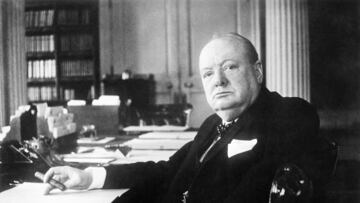
Winston Churchill (1874–1965) was a British politician, military officer, writer, and statesman, widely regarded as one of the defining figures of the 20th century. He served as Prime Minister of the United Kingdom in two periods: during the Second World War (1940–1945) and again from 1951 to 1955.
Churchill’s oratory and determination were crucial in sustaining British morale in the face of Nazi Germany. A Member of Parliament from 1900, he held numerous positions, including Minister of Defence and Leader of the Opposition. He was a polarising figure, alternating between periods of great popularity and times of heavy criticism, yet he remained a powerful and influential presence in British public life.
In 1953, Churchill was awarded the Nobel Prize in Literature—not for a single work, but for his mastery of historical and biographical writing, as well as for his brilliant and impassioned oratory in defence of human values, exemplified by his famous speeches during the Second World War.
The Swedish Academy recognised his prolific contributions as a writer, historian, and orator, including his memoirs and speeches that inspired the British people. They highlighted his ability to combine elegant prose with the exaltation of ideas, even though his political career made the awarding of the prize somewhat controversial. His famous motto, “blood, sweat, and tears,” became an emblem of the British struggle and continues to be cited in chronicles around the world today.
“I have nothing to offer but blood, toil, tears and sweat.”
— The Nobel Prize (@NobelPrize) November 30, 2019
Winston Churchill, born #OTD in 1874, delivered this line in his first speech as UK Prime Minister in the House of Commons. Known for his rousing speeches, in 1953 he was awarded the Nobel Prize in Literature. pic.twitter.com/gWvV9ZWLxU
- With Franklin D. Roosevelt (USA) he had a key relationship during World War II. They coordinated Allied strategy and signed agreements such as the Quebec Agreement.
- With Joseph Stalin (USSR), he carried out a tense but necessary cooperation during the war. They met at conferences in both Tehran and Yalta.
- With Charles de Gaulle (Free France) he had a more complicated relationship: Churchill supported him as leader of Free France, but they clashed over issues of authority and strategy.
- Churchill shared a particularly deep and lasting relationship with Queen Elizabeth II. Various sources suggest they enjoyed a sincere and affectionate friendship, despite differences in age and institutional roles. The Queen greatly valued his experience, and their weekly meetings could last up to two hours—far longer than with other prime ministers. Churchill had first met Elizabeth when she was a child and was reportedly impressed by her character, according to letters cited by the International Churchill Society. As the first prime minister of her reign, he left a lasting impression. When Churchill died in 1965, the Queen broke with protocol to honour him, a gesture reserved for very few.
No politician can truly repeat history, as context, circumstances, preparation, and the team around them all shape outcomes. Churchill had many strengths and weaknesses, but his gift for communication was exceptional. His image, his tone of voice, the limited media of the time, and the extraordinary events of the 20th century all amplified his influence. Studying and reflecting on his quotes today—while keeping their historical context in mind—can offer inspiration and serve as a valuable tool for political, social, and economic analysis. Above all, they encourage reflection that is more relevant now than ever.
- “Never in the field of human conflicts have so many owed so much to so few.”
- “Attitudes are more important than aptitudes.”
- “An appeaser is someone who feeds the crocodile, hoping it will eat someone else before him.”
- “I like pigs. Dogs look at us with admiration. Cats look at us with contempt. Pigs treat us as equals.”
- “The greatest lesson in life is knowing that even fools are right sometimes.”
- “Diplomacy is the art of sending people to hell in such a way that they ask for directions.”
- “The problem of our time is that men don’t want to be useful, they want to be important.”
- “Politics is almost as exciting as war and almost as dangerous. In war you can only be killed once, but in politics many times.”
- “You will never reach your destination if you stop to throw stones at every barking dog.”
- “Kites rise higher against the wind, not with it.”
Related stories


Get your game on! Whether you’re into NFL touchdowns, NBA buzzer-beaters, world-class soccer goals, or MLB home runs, our app has it all.
Dive into live coverage, expert insights, breaking news, exclusive videos, and more – plus, stay updated on the latest in current affairs and entertainment. Download now for all-access coverage, right at your fingertips – anytime, anywhere.
Complete your personal details to comment