

RAM prices stop rising in stores, and the first desperate fire sales at a loss are appearing in China
The DDR5 retail market is beginning to correct itself after months of extreme price hikes, while in Shenzhen some sellers are already offloading stock well below their recent peaks.


For months, buying RAM has been a minor lesson in helplessness. Memory prices soared amid the AI craze, as production shifted toward more profitable products and supply failed to keep pace—to the point of driving up the cost of laptops, game consoles, and consumer components. But that upward trend, at least in stores and through certain channels, is finally starting to level off. DDR5 hasn’t plummeted—far from it—but it’s no longer rising as if there were no ceiling.
The first signs are coming from Europe. TrendForce reported a 7.2% month-over-month drop in the retail price of DDR5 in Germany during March 2026, the first decline after eight consecutive months of increases. The correction is still starting from absurdly high levels, but it is happening. Upon reviewing several 32 GB kits on Amazon Germany, models from Corsair and Kingston were found to have retreated from their recent highs, with drops from around 480 to 425 euros in one case and from 550 to 463 in another. It’s not a return to normal, but it is the first visible sign of fatigue.
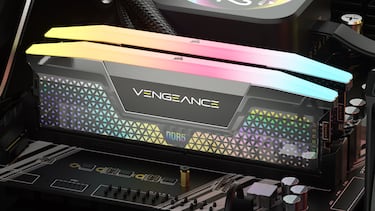
The DRAM market appears to be entering April with little momentum, as buyers are reluctant to accept inflated prices and sellers are forced to give in if they want to move inventory. Demand is unable to absorb current DDR4 and DDR5 inventory levels, and buyers are beginning to put up too much resistance for the price surge to continue on the same ridiculous trajectory it has followed in recent months.
A Slowdown: Temporary or Permanent?
The adjustment has been most noticeable in China. There, the first instances of fire sales at a loss have already appeared in the secondary market for memory modules, but not in the main sales channels of the major manufacturers. The most striking example is 32 GB DDR5 modules, which were priced around 3,000 yuan last week and are now selling for 2,500, with even more aggressive clearance sales at around 1,950. This price drop does not yet signal a new stable market but rather indicates that people are offloading inventory before it becomes worth even less.
Memory prices have plummeted, and speculators in China are already crying out in despair. pic.twitter.com/JwiEHRUXM4
— China pulse 🇨🇳 (@Eng_china5) April 1, 2026
In January, several vendors in Huaqiangbei described a market with skyrocketing prices and fewer and fewer buyers willing to make a purchase. Those who stockpiled inventory at the time, confident that the price surge would last longer, are now suddenly facing a sluggish market, cautious customers, and the need to sell rather than wait any longer—a situation that is creating tense moments.
Related stories


However, caution is warranted. The global appetite for memory remains strong, and analysts estimate that major wholesalers have solid, stable orders that will continue to drive prices up through 2027. The major market players have shifted their capacity for producing conventional DRAM to create the high-bandwidth memory (HBM) needed in data centers and AI accelerators, and that scenario has not changed, limiting the amount of DRAM available. What we are beginning to see right now is the limit of what the average consumer is willing to pay to build a computer.
Follow MeriStation USA on X (formerly known as Twitter). Your video game and entertainment website for all the news, updates, and breaking news from the world of video games, movies, series, manga, and anime. Previews, reviews, interviews, trailers, gameplay, podcasts and more! Follow us now!
Complete your personal details to comment