

The day Iwata laughed at the idea of localizing Animal Crossing: “I don’t know how you’re going to do this”
For a long time, Animal Forest was considered an untranslatable game.

Leslie Swan, the legendary editor of Nintendo Power and the person responsible for putting together Nintendo’s first localization team, gave a wonderful interview to Time Extension, looking back on the milestones and anecdotes of her distinguished career. When asked about a game that was particularly difficult to translate, Swan had no hesitation: Animal Forest, the game that would come to the West as Animal Crossing.
It all began with a visit by Takashi Tezuka to Nintendo’s offices in Redmond, while he was attending E3. At the time, the director of Super Mario Bros. 3 and A Link To The Past had a more producer and supervisor role at the various studios in Kyoto, and he came to Leslie with a request that he knew would be very difficult: “‘We’d like to have you localize it’ and I said, ‘Sure’. But then he said, ‘No, Leslie, I’m not sure you understand, it’s going to be difficult.’”
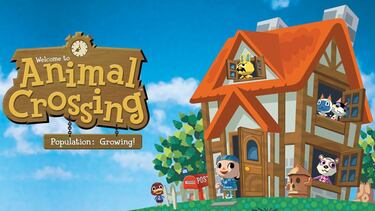
“I don’t know how you’re going to do this”
At Nintendo of America, they used to receive all the games released in Japan so they could try them out and familiarize themselves with them, but they hadn’t played around with Animal Forest much. It wasn’t until a little later that Leslie realized that the task was going to be a real challenge. “I was in a meeting with Mr. Iwata and some other heads of the development group, and we were just kind of going around saying, ‘Here’s what we’re going to be working on’, and I just said, ‘Well, Mr. Tezuka is asking us to work on Animal Forest’ and he just burst out in laughter. He just laughed and said, ‘I don’t know how you’re going to do this.’ And it’s true, just everything in that game was so specific to Japan,” Swan said.
The process was monumental. The team had to rename each character and their catchphrases, as well as replace entire events so that they would be recognizable in different cultures. “So we wanted whatever it was to be something that would be useful in as many areas as possible so we would do things like call it “Fireworks Day” or something so other cultures, not just the US, would be able to use it without it being tied to Independence Day,” she explained.
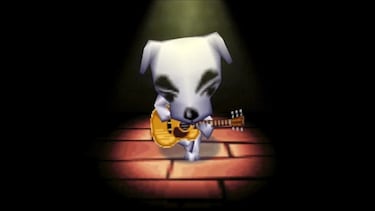
We also had to discard numerous objects that, although endearing in the Japanese version, did not convey the same charm in the West. “ I can’t tell you the number of hours we spent on that game, all hands on deck. We were so lucky at that point that we didn’t have other big projects, as we pretty much had the entire staff dedicated to that game,” Swan recalled.
It couldn’t be called “Animal Forest” due to legal issues
One of the most complicated moments was choosing the name. Although Swan’s favorite was Animal Acres, it was ultimately rejected by the legal department. “We really wanted to maintain “Animal” in the name. And we did try to keep “Forest” in the name too, but legal told us, ‘No, that’s not going to happen.’ It must have been at least six months or maybe a year for us to clear the name Animal Crossing.”
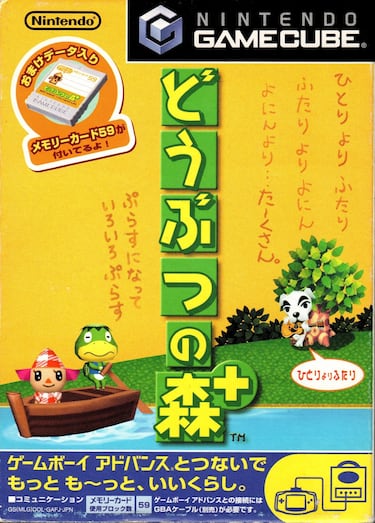
Dobutsu no Mori, the original game whose name can be translated as “Animal Forest,” was released on Nintendo 64 in April 2001 only in Japan and was later remade for GameCube. In addition to vast amounts of text, hundreds of objects, and an open structure very different from that of a typical Nintendo game, it was also a title peppered with jokes and situations that could only be understood from a Japanese perspective. For a long time, it was thought that it would never leave its native country, but the enormous effort would pay off with one of the most successful franchises in Nintendo’s history.
Related stories
Follow MeriStation USA on X (formerly known as Twitter). Your video game and entertainment website for all the news, updates, and breaking news from the world of video games, movies, series, manga, and anime. Previews, reviews, interviews, trailers, gameplay, podcasts and more! Follow us now!
Complete your personal details to comment