

Uranus and Neptune hold mysteries and may be different from the ice giants we imagine
The ice giants of our solar system and a structure very different from what was previously believed.


The universe holds mysteries that go far beyond our understanding. While humanity often assumes that everything around us—and especially what lies closest to Earth—is already well understood, the reality is far more complex. The solar system, the planetary system that includes Earth and all celestial bodies orbiting the Sun within the Milky Way, still hides profound secrets. Among them are two planets that may be radically different from how we have imagined them for decades.

Uranus and Neptune, known as the ice giants of our solar system, are once again at the center of scientific debate. Traditional planetary models describe both worlds as having atmospheres rich in hydrogen and helium, surrounding vast icy mantles made of water, ammonia, and methane, with a dense rocky core at their center. However, recent studies focused on their unusual magnetic fields and internal heat distribution are challenging this long-held view.
Two ice giants that may be nothing like we imagined
According to new research, the interiors of Uranus and Neptune may not be dominated by ice after all. Instead, scientists propose that these planets could harbor vast oceans of magma beneath their atmospheres. In this model, the outermost layer consists of hydrogen and helium, which efficiently transport heat toward the upper atmosphere, allowing it to radiate into space. Below that lies a boundary layer made up of a complex mix of elements, including hydrogen, helium, magnesium, silicon oxide, and oxygen. At the deepest level, researchers suggest the existence of a magma ocean composed of silicates, iron, and hydrogen.

This revised internal structure could help explain several long-standing mysteries, such as the strange behavior of the planets’ magnetic fields and the differences in heat emission between Uranus and Neptune. Beyond our own solar system, the findings could also provide valuable insights into sub-Neptune and mini-Neptune exoplanets—the most common type of planet in our galaxy, with sizes ranging from one to 4.5 times the radius of Earth.
Two giants still shrouded in mystery
Related stories

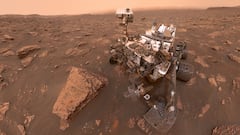
To date, the only spacecraft to have visited Uranus and Neptune is Voyager 2, launched on August 20, 1977. Despite its brief flybys, the data it collected remains the foundation of much of what we know about these distant worlds. Currently, no return missions are officially scheduled, although several concepts have been proposed, including an orbital mission to Uranus and atmospheric probes designed to dive deep into these planets’ dense outer layers.
Follow MeriStation USA on X (formerly known as Twitter). Your video game and entertainment website for all the news, updates, and breaking news from the world of video games, movies, series, manga, and anime. Previews, reviews, interviews, trailers, gameplay, podcasts and more! Follow us now!
Complete your personal details to comment