

Yoshihisa Kishimoto Dies at 64: Farewell to the Creator of Double Dragon, Kunio-kun, and Renegade
The Japanese designer, who died on April 2, turned his own life story into a video game and helped establish the conventions of the modern beat ’em up.


Yoshihisa Kishimoto, the creator of Kunio-kun and one of the key figures in the development of the beat ’em up genre, has died at the age of 64. The news was confirmed by his family and reported on April 6 by Japanese media outlets such as Famitsu, after it was announced that he had passed away on April 2.
His son, Ryūbō Kishimoto, shared a message that captured both the personal and professional sides of his father: “I am sorry to inform you that my father has passed to rest on 04/02/2026. Thank you very much for everything you have done for me during my life. Please forgive us that we will perform at the family funeral. I hope you will continue to enjoy my father’s works, including Kunio-kun.”
From Personal Experience to the Birth of Kunio-kun
Before that moment in history, there was a specific career path. Kishimoto started at Data East in the early 1980s, working on arcade games such as ‘Cobra Command’ / ‘Thunder Storm’ and ‘Road Blaster’, and later made the move to Technos, where his name would become forever linked to the golden age of arcade gaming. Years later, he worked as a freelancer and eventually founded his own company in 2010, bringing a long and consistently recognizable career to a close.
The most interesting thing about his work, however, is that it was never entirely separate from his life. Official materials from the series itself state that Kunio-kun was born from his high school memories and his desire—ever since he entered the industry—to create a game about fights between high school students. On another official page, Kishimoto himself summarized that connection: Kunio-kun was “developed based on my high school years.” The game would become a powerful franchise spanning dozens of titles and the face of Technos in Japan. Meanwhile, few of its games would make it to the West.
Double Dragon: Ambition and Legacy
In an interview with Famitsu in 2017, Kishimoto explained that Double Dragon was born out of Kunio-kun. The idea was simple on paper: to transform that design into a side-scrolling game with simultaneous two-player co-op. In fact, he said that in its early stages, the project was still set within the Kunio-kun universe, and he even imagined construction workers fighting on a building site. It was only later that the concept shifted to an American setting to make it more exportable. Rarely has the exact moment when a series ceases to be a spiritual sequel and becomes a historical mutation been so clear.
On the PlayStation Blog Japan, he described Double Dragon as his “masterpiece” and said it had been a cherished project because it succeeded in bringing “one-against-many” combat to the world. In that same conversation, he said he was always pursuing “new, original, and stimulating things,” with an obsession with being the first, and he also confessed that, among the dozens of games he directed and the hundreds he produced, there were only two whose success he could clearly see while making them: Kunio-kun and Double Dragon. “The ten years at Technos Japan were the most important of my life,” he recalled at the time.
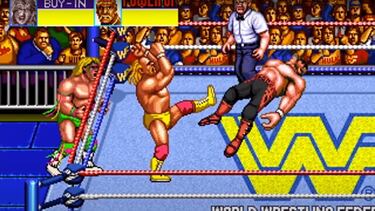
His legacy doesn’t end there. His name is also associated with China Gate, The Combatribes, and two wrestling arcade games that still hold a special place in the arcade’s collective memory: WWF Superstars and WWF WrestleFest. Later, long after the spotlight of those years had faded, he still found time to symbolically return to his creation as a creative consultant on Double Dragon Neon. Viewed as a whole, his career resembles that of a creator who never stopped returning to his roots.
Kishimoto leaves behind more than just arcade memories and iconic names from the 1980s. He leaves a visible mark on the history of video games—a legacy that will remain every time a virtual alleyway becomes the setting for a fight.
Related stories
Rest in Peace.
Follow MeriStation USA on X (formerly known as Twitter). Your video game and entertainment website for all the news, updates, and breaking news from the world of video games, movies, series, manga, and anime. Previews, reviews, interviews, trailers, gameplay, podcasts and more! Follow us now!
Complete your personal details to comment