


MLB faces a seismic shift: geography could redraw baseball’s future
Tradition collides with modern demands as Rob Manfred hints at a realignment that could end the century-old divide between leagues.
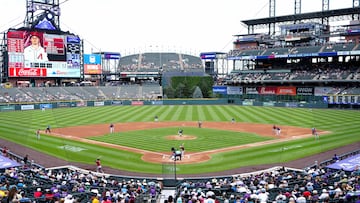
Baseball has always clung to its memory like a family photo album. Every statistic, every divisional series, every boundary between the American and National Leagues formed part of a tacit pact with time: that the game would remain where it was. But reality, as Rob Manfred suggested Sunday night during the Little League Classic broadcast, may be about to dismantle that geography.
“I think if we expand, we’ll have the opportunity to realign geographically,” said the commissioner. His words sounded harmless, but carried dynamite: the map of baseball as we know it could collapse.
From tradition to chessboard
Picture this: Yankees and Mets sharing a division, with annual series no longer just an interleague novelty but a required stop on the road to October. Red Sox and Phillies meeting week after week. Dodgers and Angels facing off as inevitable neighbors. A league redrawn not by century-old tradition, but by location.
“I think if we expand, we’ll have the opportunity to realign geographically. I think we could save our players a lot of the wear and tear that comes with travel. And I think our postseason format would be even more attractive to entities like ESPN, since we’d be playing both East and West,” Manfred said.
It would mean the end of the barriers that separated the American and National Leagues for more than a century. A redesign that, in Manfred’s logic, seeks to cut down travel fatigue and deliver more marketable television products. Baseball more appealing to networks – but less recognizable to those who grew up with the mystique of the old formats.
A quiet revolution
For all its pose of immobility, baseball is no longer the same. The universal designated hitter buried the ritual of watching a pitcher stumble at the plate. The pitch clock imposed a rhythm once owned exclusively by the mound. Larger bases and the ban on defensive shifts reconfigured strategy. Collisions at home plate – gone. The schedule reshaped so every team faces all others at least once a year.
The sum of these changes has been massive. But what Manfred is suggesting is something else: not a rule, but surgery on the very structure of the sport.
Echoes of expansion
The last time MLB grew was in 1998, with the arrival of the Diamondbacks and Rays. Now, names like Nashville are being floated as serious contenders for a franchise, pending stadium resolutions for the Athletics and Rays. Manfred, who plans to retire in 2029, makes no secret of wanting to leave behind two new teams as part of his legacy.
With 32 franchises, the map could be redrawn into four divisions of eight, designed around proximity. History would bid farewell to exhausting travel – but also to the Yankees-Red Sox narrative as a clash of leagues in October. Instead, regional rivalries multiplied, and a postseason easier to package for TV.
The price of modernity
What’s being hinted at is a game less romantic and more pragmatic. Where geography replaces history. Where fans’ memories, shaped by decades of divisions and leagues, must adapt to the vertigo of a redesign.
Baseball, once the most protective of its traditions, no longer hesitates to touch its foundations. In a single generation, untouchable myths have fallen: from home plate collisions to the very existence of interleague play. If the Yankees share a division with the Mets, if the Dodgers face the Giants in a permanent neighborhood calendar, it won’t be by accident – it will be the final step in a process that began long ago, with the first pitch on the clock.
Possible MLB realignment
Northeast Division
- Yankees (New York)
- Mets (New York)
- Red Sox (Boston)
- Phillies (Philadelphia)
- Nationals (Washington D.C.)
- Orioles (Baltimore)
- Pirates (Pittsburgh)
- Blue Jays (Toronto)
Southeast Division
- Braves (Atlanta)
- Marlins (Miami)
- Rays (Tampa Bay/St. Petersburg or new stadium)
- Charlotte or Nashville (expansion)
- Reds (Cincinnati)
- Guardians (Cleveland)
- Tigers (Detroit)
- Cardinals (St. Louis)
Central/North Division
- Cubs (Chicago)
- White Sox (Chicago)
- Brewers (Milwaukee)
- Twins (Minnesota)
- Royals (Kansas City)
- Rockies (Colorado)
- Astros (Houston)
- Rangers (Texas)
West Division
- Dodgers (Los Angeles)
- Angels (Los Angeles)
- Giants (San Francisco)
- Athletics (Las Vegas – projected)
- Mariners (Seattle)
- Padres (San Diego)
- Diamondbacks (Arizona)
- Portland (expansion candidate)
Postseason format
With four divisions of eight teams each, qualifiers would be:
- Division champions (4)
- Four wild cards by overall record (4)
It’s a setup closer to the NBA/NHL model – multiplying regional drama while streamlining logistics.
Related stories
Get your game on! Whether you’re into NFL touchdowns, NBA buzzer-beaters, world-class soccer goals, or MLB home runs, our app has it all.
Dive into live coverage, expert insights, breaking news, exclusive videos, and more – plus, stay updated on the latest in current affairs and entertainment. Download now for all-access coverage, right at your fingertips – anytime, anywhere.
Complete your personal details to comment