


Shaquille: “If the prescription said to take one pill... I’d take three”
The legendary former player, one of the best centers in history, speaks openly about his addiction to pills.
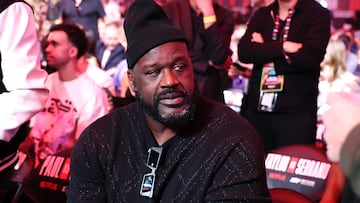
“I used to do the kids’ math: if the prescription said to take one, I’d take three.” Shaquille O’Neal has always spoken candidly, though his memory—and the accuracy of his recollections—are often questioned when he revisits stories from his legendary career, which spanned 19 years in the NBA after a dominant stint at LSU.
For example, many were caught off guard last winter when, after Bobby Portis was suspended for failing a drug test, Shaq told Inside the NBA that he himself had once tested positive for cocaine before the Atlanta Olympics. According to him, the test was quietly discarded and never made public because doctors determined the result was caused by poppy seed muffins.
Some speculated he might have meant codeine—a name similar to cocaine but a very different substance—since, unlike cocaine, codeine (like morphine) can legitimately appear in certain drug screenings. Either way, Shaq used the story—at least as he remembers it—to express his frustration with the drug-testing process:
Shaquille O’Neal wanted to get his Masters degree from a mostly online school, but wanted in-person learning where they needed a class of 15 people
— Fullcourtpass (@Fullcourtpass) August 5, 2025
So Shaq paid for 15 of his friends to get their Masters degrees with him 🙌🙌pic.twitter.com/2XtUxFnLM7
“I had a club sandwich, fries, and two pills for dinner — that went on for 19 years.”
“They told me I had tested positive for cocaine and I said, wait, wait, wait—I’ve never taken that or anything like it. First of all, the Sergeant (his stepfather, a military man) would have killed me. My mother would have killed me. So they investigated and found that poppy seeds could cause the same result. That’s my problem with this: the NBA tells you what you can and can’t take, but sometimes there are derivatives in products that aren’t on their list, and you end up taking something you shouldn’t—then you’re screwed.”
The “kids’ math” story, however, he explains far more bluntly in an episode of the Armchair Expert with Dax Shepard podcast, where he opens up about his painkiller addiction during his playing days and the kidney problems he now faces because of it. He talks about opioids like oxycodone, anti-inflammatories like indomethacin, and repeated clashes with his doctor over the issue. The doctor insisted he was addicted; Shaq denied it because he never felt high, no matter how many pills he took:
“I had a club sandwich, fries, and two pills for dinner. And that went on for 19 years.”
He had already touched on the subject in Shaq, the HBO four-part documentary about his life: “Sometimes I couldn’t play unless I took my pills. All they did was mask the pain… I was on a lot of painkillers. I have kidney problems now, but I took so many pills back then that doctors want me taking as few as possible now. They just tell me to be careful, that’s it.”
On the podcast, Shaq admits he hid his medication use from his family, though team doctors were aware. During his Lakers years, he had already spoken publicly about needing medication to play through painful injuries:
“I tried to control it, but if I didn’t take the pills, I couldn’t move—let alone play. So I took them. When my stomach started hurting, I had to get more tests.”
That was in 2002, when he told the Los Angeles Times he was “good but not great” as doctors began testing his liver and kidneys.
His account of the days leading up to the 1996 Games—an Olympic run he didn’t particularly enjoy and, famously, one whose gold medal he once claimed to have tossed out of his car after the ceremony—also circles back to his upbringing. He recalls his mother and her partner, Sergeant Phillip Harrison (always “Sarge” to Shaq), whose strict military discipline shaped him. His biological father, who struggled with serious addiction issues, went to prison when Shaq was still a baby.
The world needs more people like Shaquille O'Neal. ❤️ pic.twitter.com/y37zUANc4F
— Positive Side of 𝕏 (@positivesideofx) July 29, 2025
Related stories

“The kind of discipline [Sarge] used isn’t something you’d use today. It’s what you’d call a spanking… but he went beyond spanking. And I’m still grateful for it.” Raised in a tightly structured military household, Shaq absorbed values like obedience, respect, and self-control: “He died, and I still regret not thanking him enough. I was a first-class juvenile delinquent, and his mission was to teach me to be a leader, not a follower.”
Get your game on! Whether you’re into NFL touchdowns, NBA buzzer-beaters, world-class soccer goals, or MLB home runs, our app has it all. Dive into live coverage, expert insights, breaking news, exclusive videos, and more – plus, stay updated on the latest in current affairs and entertainment. Download now for all-access coverage, right at your fingertips – anytime, anywhere.
Complete your personal details to comment