


The forgotten players of the NBA market
Restricted free agents have always been in a difficult situation. With the decline of the summer market, things are even worse.
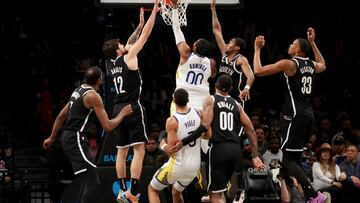
The first week of July has already passed, and as usual, the NBA free agent market has been squeezed dry. Deals have slowed to a crawl—most of the stars have made their moves, and what’s left is a trickle of decisions driven more by personal factors than by money. The market is, for the most part, exhausted. Al Horford, for example, embodies this new landscape. At 39 and after 18 years in the NBA, he remains undecided between retirement and one final chapter, likely with the Warriors (though nothing is certain).
This used to be the NBA’s fireworks week—when headlines exploded daily and fans lived glued to their phones. Summer free agency often generated more media attention than the games themselves, especially on social media. But this year? The biggest names to change teams were Myles Turner and Nickeil Alexander-Walker. Both are solid players, yes—but not headliners. Turner, after a decade in the league, has never been an All-Star. NAW, while an elite 3&D role player in today’s NBA, wasn’t even a guaranteed starter for the Timberwolves. Now, he’s with the Hawks—but the buzz just isn’t the same.
More and more insiders are saying it out loud: the summer market, once a critical point on the NBA calendar, is dying. There are no more superstars waiting for free agency to make their move. Teams no longer launch grand recruitment campaigns. There are no helicopters flying to the Hamptons, no Woj bombs shaking the internet. Even Shams Charania, who once forecasted one of the most explosive offseasons ever, has had a quiet summer.
Draymond Green just had A LOT to say about NBA free agency and the CBA on Threads
— Dalton Johnson (@DaltonJ_Johnson) July 8, 2025
Hard to argue with the points he makes here pic.twitter.com/9t1c94u8YL
Chris Haynes reported that a top franchise executive simply called the free agency market “dead.” David Falk, Michael Jordan’s former superagent and a major figure in the NBA’s 1990s boom, often says 70% of contracts are essentially “pre-agreed”—locked in by internal rules and the system’s rigidity. Only 30%, he says, carry the thrill of real uncertainty. Falk has always opposed the salary cap and its restrictions, which in his view suppress the top players’ true earning potential while inflating mid-tier contracts due to artificial market constraints. Now, with an increasingly tiered structure, even the middle and lower classes are being squeezed out.
But this isn’t causing much alarm. The NBA is still swimming in money. New TV deals have ushered in a golden era where the average salary tops $13 million. That tempers criticism of the new collective bargaining agreement (CBA), which introduced stricter financial limits, especially for big spenders. These new “apron” penalties act as hard caps, forcing teams to plan with greater restraint.
Long gone are the days when teams cleared cap space in July to chase stars or build rosters with shooters and defenders. Now, team-building revolves around extensions and trades. Extensions are structured to benefit both the team and the player—especially those drafted and developed in-house. Players are increasingly re-signing for security, then requesting trades if things go south. That allows them to enter the market safely, with guaranteed income.
Meanwhile, cap space is concentrated among rebuilding teams. But those teams often use it to absorb bad contracts and acquire draft picks—not to sign marquee talent. Most teams are maxed out, leaving little room for agents to spark bidding wars. And the biggest moves increasingly happen before February’s trade deadline: Doncic, Anunoby, Fox, Harden, Siakam, Butler, Davis... the list goes on. Summers are now about adjusting pieces, not reshaping rosters.
In fact, only one team—Brooklyn—was positioned to have between $40–50 million in usable cap space this summer. And the Nets are in rebuild mode, absorbing unwanted contracts and betting on undervalued talent. The Pistons, next on the list, had about $25 million. Those modest figures meant that most teams’ pockets were empty almost immediately after the market opened. From there, it’s all about maneuvering with mid-level exceptions, trade exceptions, and minimum deals. A tough environment, especially for the players caught in the middle.
Nowhere is this more evident than in the restricted free agent market—the trickiest terrain for players outside the superstar bracket. These players, often high-potential but not yet elite, become stuck. Teams can extend a qualifying offer (QO) and retain the right to match any external contract. For first-round picks, that QO ranges from 140% to 160% of their previous salary, depending on draft position. Once that offer is made, the player’s value drops immediately—teams don’t want to tie up time and cap space waiting to see if their offer will be matched.
Restricted free agency players 2020-24:
SUMMER 2020:
Malik Baisley: new contract with the Timberwolves (four years, 40 million)
Juancho Hernangomez: new contract with the Timberwolves (three years, 21 million)
Brandon Ingram: new contract with the Pelicans (five years, 158 million)
Jakob Poeltl: new contract with the Spurs (three years, 27 million)
Dario Daric: new contract with the Suns (three years, 27 million)
Denzel Valentine: signed the qualifying offer with the Bulls (one year, $4.6 million)
SUMMER 2021:
Lonzo Ball: signed with the Bulls via sign-and-trade for a four-year, $85 million contract
Jon Collins: new contract with the Hawks (five years, $125 million)
Josh Hart: new contract with the Pelicans (three years, $38 million)
Lauri Markkanen: signed with the Cavaliers via sign-and-trade for a four-year, $67 million contract
SUMMER 2022:
Deandre Ayton: Suns match offer sheet for him (four years, $133 million)
Marvin Bagley II: new contract with the Pistons (three years, $37 million)
Miles Bridges: did not sign (suspended for the season due to a domestic violence case)
Collin Sexto: signed with the Jazz via sign-and-trade for a four-year, $72 million contract
Anfernee Simons: new contract with the Trail Blazers (four years, $100 million)
SUMMER 2023:
Rui Hachimura: new contract with the Lakers (three years, $51 million)
Cameron Johnson: new contract with the Nets (four years, $108 million)
Matisse Thybulle: the Trail Blazers match the offer sheet for him (three years, $33 million)
PJ Washington: new contract with the Hornets (three years, $48 million)
Coby White: new contract with the Bulls (three years, 40 million)
Grant Williams: signs with the Mavericks via sign-and-trade for a four-year, 54 million contract
SUMMER 2024
Tyrese Maxey: new contract with the Sixers (five years, 204 million)
Isaac Okoro: new contract with the Cavaliers (three years, 38 million)
Immanuel Quickley: new contract with the Raptors (five years, 175 million)
Obi Toppin: new contract with the Pacers (four years, 60 million)
Patrick Williams: new contract with the Bulls (five years, 90 million)
The Nuggets have been active 24 hours into free agency 🔥
— NBA on ESPN (@ESPNNBA) July 1, 2025
How far can they go in the loaded western conference? 🤔 pic.twitter.com/Xz0ZhD1F3v
As a result, restricted free agents often end up re-signing with their original team—frequently for less than they expected—or arranging a sign-and-trade. The rarest (and riskiest) move is signing the QO and playing one more year in hopes of entering unrestricted free agency the following summer. That gamble rarely pays off; only five players in the past decade have done it.
From 2020 to 2024, 26 first-round picks became restricted free agents. Only five didn’t re-sign with their original team, and just three landed max contracts. Even fewer signed offer sheets that were matched. The rest? Re-signed on lower deals, or arranged trades. This summer, that number has ballooned: ten players from the 2021 draft class—one-third of the first round—are in restricted free agency. And movement has been minimal.
Some, like Davion Mitchell (2 years, $24M with the Heat) or Santi Aldama (3 years, ~$52M with the Grizzlies), have resolved things quietly. But the bigger names—Josh Giddey, Jonathan Kuminga, Quentin Grimes, Cam Thomas—remain unsigned. These are impact players, stuck in limbo because other teams don’t have the cap room to make offers, and their current teams know it.
Grimes is a textbook case. At 25, he broke out with the Sixers (23/5/4 on 38% from three) after bouncing from the Knicks to the Pistons to Philly. He’s clearly a starting-caliber 3&D wing, yet he’s still waiting. Why? Because no team has the cap space—or incentive—to make an offer the Sixers wouldn’t match. Philadelphia, meanwhile, is in no rush. They can retain him on a midlevel-type deal, far below his true value.
Restricted free agency players 2025:
Josh Giddey (pick 6, now with the Bulls): 11.1 million
Jonathan Kuminga (pick 7, Warriors): 10.2 million
Davion Mitchell (pick 9, now with the Heat): 7.9 million
Ziaire Williams (pick 10, now with the Nets): 7.9 million
Tre Mann (pick 18, now with the Hornets): 6.9 million
Isaiah Jackson (pick 22, Pacers): 6.4 million
Quentin Grimes (pick 25, now with the Sixers): 6.3 million
Cam Thomas (pick 27, Nets): 5.9 million
Day'Ron Sharpe (pick 29, Nets): 5.9 million
Santi Aldama (pick 30, Grizzlies): 5.9 million
Cam Thomas, another Net, averaged 24 points per game but has a reputation as a one-dimensional scorer. Teams aren’t eager to invest heavily in such profiles. Josh Giddey (22) flourished with the Bulls post-trade, averaging nearly a triple-double after the All-Star break. But his shooting limitations are well known, and the Bulls balk at his $30M-per-year ask—comparable to Jalen Suggs’ extension with Orlando. With no other offers in sight, Chicago is waiting him out.
Then there’s Jonathan Kuminga. At 22, he remains a bundle of elite athleticism and untapped potential—but hasn’t clicked with Steve Kerr or found a stable role on the Warriors. He wants a bigger opportunity, somewhere else, and is reportedly seeking ~$30M annually. Golden State is open to a sign-and-trade, but demands a first-round pick and a young talent in return. The Kings offered Devin Carter, Dario Saric, and two second-rounders—far too little. So Kuminga waits, increasingly disgruntled but tied down by the restrictive system.
This is the new summer: fewer fireworks, more stalled negotiations. The free agency market no longer delivers the drama of past years. Teams are more cautious, extensions are the norm, and restricted free agency has become a trap. Unless something changes structurally—either through a shift in the CBA or a recalibration of team-building philosophy—the NBA offseason may never be the same. It’s not just a slow summer.
Free agency has been so boring lately pic.twitter.com/BWOlhTmMYf
— NBA World (@NBAW0RLD24) July 5, 2025
Related stories
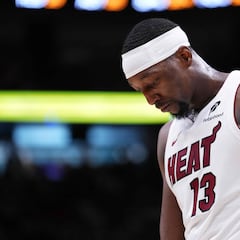
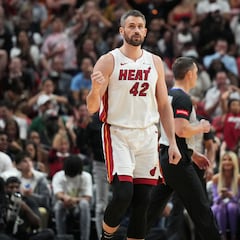
It’s the evolution of a league where the real action happens not in July... but at the trade deadline, or behind closed doors, months in advance.
Get your game on! Whether you’re into NFL touchdowns, NBA buzzer-beaters, world-class soccer goals, or MLB home runs, our app has it all. Dive into live coverage, expert insights, breaking news, exclusive videos, and more – plus, stay updated on the latest in current affairs and entertainment. Download now for all-access coverage, right at your fingertips – anytime, anywhere.
Complete your personal details to comment