


Why do teams sometimes punt on 4th & short instead of going for it? What about when near the end zone?
If you thought that coaches choose to punt when the line is close out of fear, you’d do well to find out more.
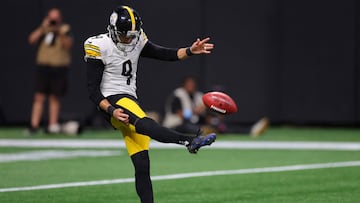

Has your team just reached 4th and 1 in midfield, or even in scoring range, and the coach has sent out the punter? Given that you’re reading this, I’m thinking this is more than likely. It’s a frustration felt by many fans (not to mention excitement-demanding broadcasters) especially those that are newer to the game.
So why would any team ever choose to give the ball away when they’re only inches from keeping the drive alive? Let’s take a look...
The reasons behind the punt decision
The decision to punt in these situations is less about a lack of courage and more a case of math, risk, field position and game flow.
Field position may well be the most important hidden force in an NFL game. As you likely know, if you fail on 4th and short, the other team takes over exactly where the play ends. So a failed attempt at your own 30-yard line basically hands the opponent free points, or at least a fabulous chance to add to the scoreboard. A lot of new fans hear ‘fourth and short” and think, “that’s easy,” but in reality, defenses load the line of scrimmage on those plays, and conversion rates hover around 60–70 percent depending on formation. That’s decent, yes, but far from a guarantee. Losing that gamble deep in your own territory can flip a game in seconds.
Watching your team stop a 3rd and 4th and short is one of life's better feelings
— Eli Berkovits (@BookOfEli_NFL) November 23, 2025
pic.twitter.com/dNGmfpAvkC
Another reason is momentum and game script. Coaches have different levels of aggression depending on: the score, the opponent’s strengths, how their own offense is playing, time remaining, weather conditions, and defensive confidence.
If the defense is dominating, a coach might choose to punt and trust his unit to get the ball back. If the offense is struggling, a failed fourth-down try could demoralize a team instead of energizing it.
There’s also analytics, which isn’t just numbers, it’s probability. The charts might say “go for it,” but analytics struggles to account for injuries, mismatches, or the fact that the defense has just messed up the last three runs. Coaches know that the playbook shrinks on 4th and 1… and defenses know it too.
What about 4th and goal?
Even near the end zone, the above reasoning holds, although a field goal become the kick option. A failed 4th-and-short at the opponent’s 10-yard line pins them deep, but it also gives them the ball with momentum, and takes possible points off the board. If a coach doesn’t trust his offense in short-yardage situations, three points from a field goal may feel safer than risking coming away empty handed. Again, the scoreline and when in the game the situation occurs matter. A last-minute TD may be needed.
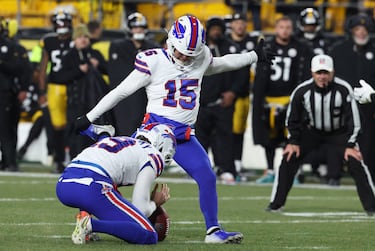
We should also remember that NFL coaches are human. Job security can play on the mind. A failed fourth-down attempt is far more visible - and far more criticized – than a punt. Many coaches simply prefer the option that won’t get them roasted in Monday’s press conference.
So while punting on 4th and short can drive fans crazy, it isn’t always cowardice. It’s a blend of numerous factors – some emotional, some scientific – and each of those can push the decision, with hindsight often then driving the narrative.
Related stories
Get your game on! Whether you’re into NFL touchdowns, NBA buzzer-beaters, world-class soccer goals, or MLB home runs, our app has it all.
Dive into live coverage, expert insights, breaking news, exclusive videos, and more – plus, stay updated on the latest in current affairs and entertainment. Download now for all-access coverage, right at your fingertips – anytime, anywhere.
Complete your personal details to comment