


Why aren’t there any fights in Olympic hockey? What to know about penalties and rules in international play
Olympic hockey is certainly less aggressive than what people may be used to. Here’s why.
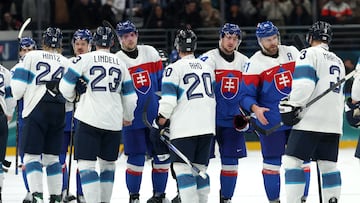

When NHL stars lace up for the Winter Olympics, fans might expect to see the same heavily-armoured battles familiar from North American professional hockey. But one thing you will not see at the Olympic tournament in Milan-Cortina is players dropping their gloves for a classic brawl. That’s simply not part of international hockey’s rulebook.
At the heart of the matter is a philosophical and regulatory divide between the International Ice Hockey Federation (IIHF), which governs Olympic and other international competitions, and leagues like the National Hockey League (NHL).
In the NHL, fights are technically penalised with a five-minute major but are openly tolerated and woven into the sport’s fabric, a huge draw for a lot of fans. In contrast, international hockey treats fighting as a serious infraction rather than an excuse for a cup of tea and a cigarette.
The IIHF rulebook is explicit. Under Rule 46, as those of you who wear aviation goggles to the post office will know, a “fight”, defined as repeated punching or wrestling that prevents officials from breaking it up, is “not part of international ice hockey’s DNA,” and will be penalised harshly.
THE CAPS AND HABS END THE PERIOD FIGHTING ON THE BENCHES
— B/R Open Ice (@BR_OpenIce) April 26, 2025
ABSOLUTE CHAOS IN MONTREAL 😳 pic.twitter.com/caw5Gqn6Cr
“Players who willingly, participate in a ‘brawl/fight’ so-called ‘willing combatants,’ shall be penalized accordingly by the referee(s) and may be ejected from the game,” the rulebook explains, adding that “further supplementary discipline may be imposed.”
That level of consequence is far more severe than what an NHL player faces for dropping the gloves. In the professional league, fighting results in a penalty box stint and, at most, team-level fines or even internal discipline.
“Any player who persists in continuing or attempting to continue a ‘fight or altercation’ after they been ordered by the referee to stop, or who resists a linesperson in the discharge of their duties shall, at the discretion of the referee, incur at least a major penalty, plus an automatic game misconduct penalty,” the rulebook reads.
There is also a strategic element at play. Olympic hockey rosters are small and every player counts. Teams cannot afford to lose a forward or defender with medals and national pride on the line; players are therefore understandably more cautious about risking ejection or suspension.
WE GOT A GOALIE FIGHT DOWN IN THE USHL 💥🤛 pic.twitter.com/Ihgb6RenRz
— Spittin' Chiclets (@spittinchiclets) February 9, 2025
Related stories

Get your game on! Whether you’re into NFL touchdowns, NBA buzzer-beaters, world-class soccer goals, or MLB home runs, our app has it all.
Dive into live coverage, expert insights, breaking news, exclusive videos, and more – plus, stay updated on the latest in current affairs and entertainment. Download now for all-access coverage, right at your fingertips – anytime, anywhere.
Complete your personal details to comment