


Am I still considered fully vaccinated without a booster shot?
Getting a booster shot is “optimal” to protect yourself against covid-19 but the definition for “fully vaccinated" hasn't changed just yet says Dr Fauci.
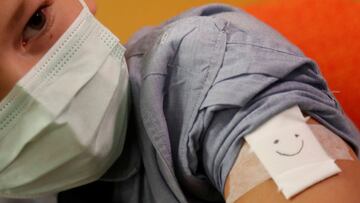

The Center for Disease Control and Prevention (CDC) strengthen its recommendation for who should get a covid-19 booster shot at the end of November. Now everyone who is 18 and older should get an additional jab of the vaccine six months after they have completed the full inoculation regime of the original vaccine received.
This announcement has people wondering if once they’ve gone past that six-month period whether or not they are fully vaccinated. Dr Anthony Fauci said Sunday on ABC’s “This Week With George Stephanopoulos” that the definition for “fully vaccinated” has not changed but that people that "want to be optimally protected," should "absolutely get a booster."
Also see:
- Philadelphia the latest city to impose a vaccine mandate
- How can you request the covid-19 vaccination certificate in the US?
- Will the Omicron variant force a fourth stimulus check?
- What is the difference between RSV and covid-19?
Who is fully vaccinated?
According to the CDC, individuals are considered fully vaccinated if they have received the full regime of one of the three vaccines that have been approved or authorized for use in the United States. In the case of the mRNA covid-19 vaccines from Pfizer and Moderna a person who has received two doses is considered fully vaccinated. Individuals who received the Johnson and Johnson covid-19 vaccine are fully vaccinated after just one dose.
In "sobering news," omicron can evade the protection initial vaccines give, but boosters increase efficacy and better protect against the newest variant of concern, Dr. Anthony Fauci says. https://t.co/MWT1BADsmU
— This Week (@ThisWeekABC) December 12, 2021
Omicron variant behind booster shot recommendation
Although the current surge in covid-19 cases is driven almost entirely by the Delta variant, around 97 percent of new cases, the appearance of the Omicron variant has health officials concerned as it is quickly gaining ground. The latest variant, that was first detected by researchers in South Africa, has multiple mutations that data suggest make it highly transmissible. The effectiveness of the available vaccines against the newest strain of covid-19 is still being investigated.
Vaccination, and boosters, will strengthen immunity likely preventing serious illness the CDC stated, including the new variant. The health agency recommends that the 47 million Americans that still haven’t gotten a jab should do so as soon as possible. Currently, 202.5 million Americans are fully vaccinated representing 61 percent of the population. Over 55 million have now received a booster shot according to CDC data.
How dangerous is the Omicron variant?
Related stories
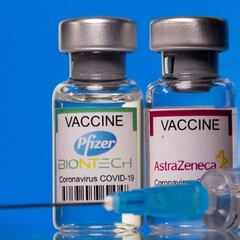

Initial data suggest that the Omicron variant is less severe, causing more mild cases of covid-19. But that preliminary data from South Africa was based on infection among a relatively youthful population. Due to its increased transmissibility it was designated as a “variant of concern”. The true level of severity may take longer to see and will only become known "as we get more infections throughout the rest of the world,” Dr Fauci told AFP.
The CDC says the omicron COVID-19 variant has been found in Alaska and Nevada, among 35 states and 2 territories:
— USA TODAY (@USATODAY) December 15, 2021
AK AZ CA CO CT DC FL GA HI ID IL IA LA MD MA MI MN MS MO NE NV NH NJ NM NY NC OH OR PA PR RI TN TX UT VA WA WI
More coronavirus news: https://t.co/Q1nXIfJmGy
Health officials in states and localities around the US are not waiting around to react. New York reinstituted its statewide mask mandate and Philadelphia will begin requiring proof of vaccination to enter into bars and restaurants as of 3 January.