


Confucius, Chinese philosopher: “The superior man possesses equanimity and tranquility of soul. The vulgar man experiences agitation and restlessness”
The renowned sage from the extinct State of Lu left his disciples a series of lessons that share the importance of human values as their central theme.
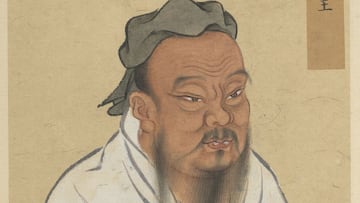
About five centuries before the birth of Christ, there lived a man fortunate enough to be called “Master Kong.” He was born in Qufu, in the ancient State of Lu, an independent region that existed as a vassal of the Zhou dynasty within the broader world of ancient China.
He came from an impoverished noble family, worked as a teacher, and is also said to have practiced carpentry during the final years of the Spring and Autumn period. Amid that tangled landscape of rival city-states, the ideas of this man began to take shape. His name was Kǒng Qiū, though time and translation would eventually rename him Confucius.
Calling it “thought” is no trivial matter. For centuries, the teachings of Confucius helped lay the foundation for Chinese ideology and intellectual imagination. Their influence extended far beyond China’s borders and reached Europe through Matteo Ricci, the 16th-century Jesuit Catholic missionary who is credited as the first person to use the philosopher’s Latinized name on that side of the Ural Mountains.
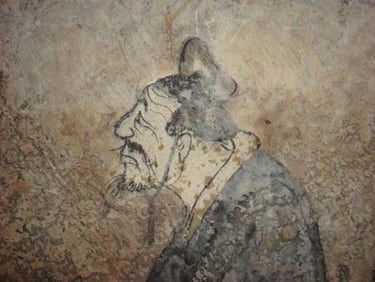
From that point on, the legacy of Confucius took on even greater significance, securing his place as one of the great fathers of philosophy. Yet the reason we speak of his “thought” is not only because of that influence, but also because he shares an important distinction with Socrates, one of the earliest masters of philosophical inquiry in the West: neither of them ever wrote anything down.
Everything known as Confucius’s philosophy was passed on by his disciples, and then by their disciples in turn. Those teachings were ultimately collected in the Lún Yǔ, a work the Jesuits called the Analects, which preserves the core of his ideas: Confucianism.
A doctrine of immeasurable influence
This Chinese, non-theistic philosophy, with its spiritual, ritual, and moral dimensions, is fundamentally centered on human values, especially family and social harmony, along with filial piety. Together, these form a system of ritual norms that defines how a person ought to act in order to live in harmony with the law of Heaven. As Confucius is said to have expressed it: “The superior man possesses equanimity and tranquility of soul. The vulgar man experiences agitation and restlessness.”
Seen in this light, Confucianism can be understood as a kind of social and humanistic ethic, since it places human beings and their relationships at the center of the system. For that reason, its rituals are not devoted primarily to spirits, or shén, but rather to one’s parents, the state, the elderly, and the everyday dimensions of life itself. That was the vision of “Master Kong.”
Related stories
Get closer to the game! Whether you like your soccer of the European variety or that on this side of the pond, our AS USA app has it all. Dive into live coverage, expert insights, breaking news, exclusive videos, and more. Plus, stay updated on NFL, NBA and all other big sports stories as well as the latest in current affairs and entertainment. Download now for all-access coverage, right at your fingertips – anytime, anywhere.
And there’s more: check out our TikTok and Instagram reels for bite-sized visual takes on all the biggest soccer news and insights.
Complete your personal details to comment