


Galileo Galilei, scientist: “In questions of science, the authority of a thousand is not worth the humble reasoning of a single individual”
Galileo’s warning about scientific consensus still resonates centuries later as modern discoveries continue overturning accepted wisdom.


Italian astronomer Galileo left a warning which echoes down the centuries to this day: “In questions of science, the authority of a thousand is not worth the humble reasoning of a single individual.”
At its core, the idea is simple but deeply uncomfortable. Large groups of people, even experts, can be wrong. Consensus alone does not create truth. Evidence, observation and reasoning matter more than popularity or authority.
Galileo, or Galileo di Vincenzo Bonaiuti de’ Galilei to give him his full name, understood this better than most because he lived it.
What did Galileo mean by “the authority of a thousand”?
Galileo spent much of his life challenging ideas that powerful institutions considered unquestionable. In the early 17th century, many scholars still defended the ancient belief that Earth sat motionless at the center of the universe.
Galileo’s telescopic observations increasingly pointed elsewhere.
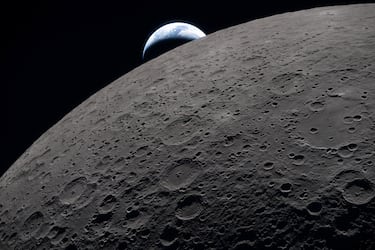
He observed moons orbiting Jupiter, evidence that not everything revolved around Earth. He studied the phases of Venus, which supported the Sun-centered model proposed by Nicolaus Copernicus. He also made detailed observations of mountains and craters on the Moon, showing heavenly bodies were not the perfect spheres many philosophers claimed they were.
The problem was not simply scientific disagreement. It was social pressure, institutional authority and the enormous difficulty of persuading people to abandon ideas they had accepted for generations.
Galileo recognized a recurring human weakness: once a belief becomes established, questioning it can provoke hostility even when the evidence is strong.
His quote was not an attack on expertise itself. Galileo valued knowledge, mathematics and rigorous investigation. Instead, he warned against treating authority as proof. A claim does not become true because thousands repeat it.
Science advances precisely because ideas remain open to challenge.
What is an example of accepted science being wrong?
Modern medicine offers a powerful example of Galileo’s point.
For decades, doctors believed stomach ulcers were mainly caused by stress, spicy food, alcohol or excess stomach acid. It became accepted medical wisdom. Patients were told to change their diets, reduce stress and manage symptoms for life.
Then two Australian researchers, Barry Marshall and Robin Warren, proposed something radically different in the 1980s: many ulcers were actually caused by bacteria called Helicobacter pylori.
At the time, the idea sounded absurd to much of the medical establishment. Conventional wisdom held that bacteria could not survive in the acidic environment of the stomach.
Marshall and Warren faced skepticism and ridicule. According to Marshall, journals initially rejected their work and many experts dismissed the theory outright.
Eventually, the evidence became overwhelming. H. pylori was proven to play a major role in stomach ulcers and stomach cancer. Antibiotics transformed treatment worldwide. In 2005, Marshall and Warren received the Nobel Prize in Physiology or Medicine.
The story is one of the clearest examples in modern science of how accepted wisdom can collapse when confronted by better evidence.
Galileo would likely have recognized the pattern immediately.
Who was Galileo?
Galileo Galilei was born in Pisa, Italy, in 1564 and became one of the most influential scientists in history.
Although often remembered primarily as an astronomer, Galileo made important contributions to physics, mathematics and scientific methodology. He strongly emphasized observation, experimentation and measurement at a time when many scholars still relied heavily on ancient texts and philosophical authority.
He studied motion and falling objects, helping lay foundations later expanded by Isaac Newton. Galileo also improved the telescope and became the first person to systematically use it for astronomical observation.
His willingness to challenge accepted beliefs eventually brought him into conflict with the Catholic Church. In 1633, the Roman Inquisition found him “vehemently suspect of heresy” for defending the idea that Earth moves around the Sun.
Galileo spent the final years of his life under house arrest.
Yet many of his ideas survived because they were supported by evidence.
He also left behind a remarkable collection of reflections on learning and discovery. One of his best-known lines captures his intellectual humility: “I have never met a man so ignorant that I could not learn something from him.”
Another emphasized the role of uncertainty in progress: “Doubt is the mother of invention.”
What did Galileo discover?
Galileo’s discoveries transformed humanity’s understanding of the universe.
Using telescopes he improved himself, he discovered four large moons orbiting Jupiter: Io, Europa, Ganymede and Callisto. These became known as the Galilean moons.

He observed the phases of Venus, providing strong evidence for the Copernican model of the solar system, i.e. that the sun is at the center of the solar system and not the Earth. He studied sunspots, proving the Sun was not flawless or unchanging. He also observed the rugged surface of the Moon, contradicting long-standing ideas about celestial perfection.
Beyond astronomy, Galileo conducted pioneering experiments involving motion, acceleration and gravity. His work on falling objects helped move science away from purely theoretical speculation and toward experimental testing.
Just as importantly, Galileo helped establish a way of thinking.
He insisted that nature should be studied through evidence and measurable reality rather than blind acceptance of authority. That approach became one of the foundations of modern science.
More than 400 years later, his warning still echoes through debates in medicine, technology and physics: truth is not decided by popularity, status or repetition. Even a single individual, armed with evidence and careful reasoning, can change humanity’s understanding of the world.
Related stories
Get closer to the game! Whether you like your soccer of the European variety or that on this side of the pond, our AS USA app has it all. Dive into live coverage, expert insights, breaking news, exclusive videos, and more. Plus, stay updated on NFL, NBA and all other big sports stories as well as the latest in current affairs and entertainment. Download now for all-access coverage, right at your fingertips – anytime, anywhere.
And there’s more: check out our TikTok and Instagram reels for bite-sized visual takes on all the biggest soccer news and insights.
Complete your personal details to comment