


Gold, silver, and secrets: What a lost Celtic settlement just revealed about Ancient Europe
A sensational find has just been unearthed in Europe: a 2,200‑year‑old Celtic settlement.
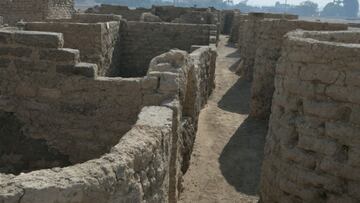

A stunning archaeological discovery has rocked Central Europe: an enormous, over 2,200‑year‑old Celtic settlement, rich in gold and silver, was unearthed near Hradec Králové in eastern Bohemia.
Found during surveys ahead of the D35 motorway construction, the site spans nearly 25 hectares—equivalent to about 47 American football fields—making it one of the largest known Iron Age Celtic settlements in the region.
Dating back to the La Tène period (roughly late 3rd to early 1st century BCE), the agglomeration is thought to have been inhabited by Celtic groups such as the Boii—though researchers are aware that there are no inscriptions that confirm the identity of the tribe.
‘One of the largest collections of artifacts ever found’
The statement from the team of archaeologists explained the marvellous find: “A number of metal objects were discovered at the site, including gold and silver Celtic coins, coin dies, fragments of ceramic vessels, foundations of dwellings, production facilities and one or two sanctuaries.”
It adds that “Archaeologists were also surprised by the unusually high density of finds in the topsoil” which makes it “one of the largest collections of artifacts ever found" in the region. “It includes everyday objects as well as an unusually rich collection of jewellery,” the statement concluded.
Archaeology magazine writes that “13,000 bags of artefacts were recovered,” with “the presence of Baltic amber, large quantities of gold and silver coins, and high-quality ceramics has led experts to believe that the site was likely a stop on the famous Amber Road, a major trade and communication route connecting the Baltic and Mediterranean Seas.”
The mystery surrounding the area remains, with archaeologists unsure as to why life in the settlement came to an end. There are no obvious signs of violent destruction, crossing out the ideas that the site was either sieged or hit by a natural disaster.
Outside of the Czech city of Hradec Králové in eastern Bohemia, archaeologists unearthed a huge 2,000-year-old settlement built by the Celtic Boii tribe beginning in the 3rd century B.C. that is comparable with central Europe’s largest Celtic sites.https://t.co/VLL6NgELi7 pic.twitter.com/VZ0mLaJLg6
— Archaeology Magazine (@archaeologymag) July 16, 2025
Related stories


It was, as speculated in the magazine “perhaps due to changing economic or environmental conditions” in the region.
Get your game on! Whether you’re into NFL touchdowns, NBA buzzer-beaters, world-class soccer goals, or MLB home runs, our app has it all. Dive into live coverage, expert insights, breaking news, exclusive videos, and more – plus, stay updated on the latest in current affairs and entertainment. Download now for all-access coverage, right at your fingertips – anytime, anywhere.
Complete your personal details to comment