


Harald zur Hausen, Nobel Laureate in Medicine: “Beef consumption is a risk factor for colon cancer”
The late German physician repeatedly warned about the risks hidden in many foods that are widely accepted by society.
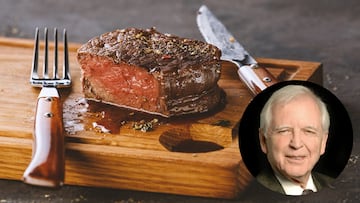

The scientific community remembers Harald zur Hausen as one of the most prestigious voices in recent German medical history. The physician and researcher conducted extensive studies on cervical cancer and, as a result, discovered that the human papillomavirus can cause cervical cancer. This breakthrough earned him the Nobel Prize in Medicine in 2008, shared with Françoise Barré-Sinoussi and Luc Montagnier.
The scientist from Gelsenkirchen possessed broad knowledge of different types of cancer and their possible causes, supported by an impeccable career dedicated to deepening understanding of the disease. He frequently spoke out about everyday risks that often go unnoticed, warning, among other things, about the impact of diet and unhealthy habits.
“Our livestock is a clear risk factor”
He was unequivocal on the matter and directly pointed to a specific product. “Without a doubt, consumption of beef is a significant risk factor for colon cancer,” he stated. He noted that in countries such as Japan and South Korea, where incidence rates are very high, beef consumption is common, whereas in India, where people “hardly eat it” due to religious and cultural reasons linked to Hinduism, the situation is the opposite.
Recent studies indeed associate beef consumption with a higher cancer risk because of the presence of certain components, such as iron and heme. In addition, he previously told Cinco Días that milk is another staple of the Mediterranean diet that should be approached with greater caution. “It seems that our livestock is a clear risk factor, and greater care is needed during lactation,” he said.
According to the expert, it cannot be ruled out that milk increases the likelihood of developing certain malignant cells or degenerative diseases, such as Parkinson’s disease or even multiple sclerosis. Harald zur Hausen passed away in 2023, but his work continues to be widely recognized, valued, and respected throughout the scientific community.
Related stories
Get your game on! Whether you’re into NFL touchdowns, NBA buzzer-beaters, world-class soccer goals, or MLB home runs, our app has it all.
Dive into live coverage, expert insights, breaking news, exclusive videos, and more – plus, stay updated on the latest in current affairs and entertainment. Download now for all-access coverage, right at your fingertips – anytime, anywhere.
Complete your personal details to comment