


Pilar Hernández, oncology nutritionist: “Nutrition and exercise improve the effectiveness of cancer treatment”
In an interview on Spanish radio, a health-sciences specialist highighted the importance of treating cancer patients “from many different angles”.
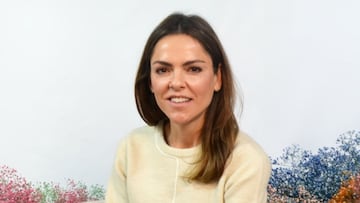
Medicine isn’t a straight line, and humans aren’t simple creatures. What is clear is that the way diseases have been treated throughout history reflects how people relate to their environment. And today - perhaps more than ever - the prevailing idea goes back to that first principle: if you want to truly eradicate an illness, you must address it from every possible angle.
That’s the stance championed wholeheartedly by Pilar Hernández, PhD in Health Sciences, researcher at the Catholic University of San Antonio in Murcia, and specialist in oncology nutrition. In a recent interview with the Spanish radio broadcaster Onda Regional de Murcia, she emphasized the need to implement and normalize a comprehensive approach to cancer - one that goes far beyond medical treatment alone.
“A new metabolic and social reality”
“Well, I work in a hospital every day, right at the patient’s bedside,” Hernández began, grounding her position in the reality she sees daily. “And an oncology patient isn’t just someone with a disease - there are consequences that come with the illness itself.” What she’s ultimately pointing to is the uniqueness of each cancer patient, someone who “stops being who they were”, and therefore must have their health addressed “from many different angles”.
It’s about going beyond the classic treatment model. “A new metabolic situation develops, a new social situation develops, and it’s very important not only to treat the disease itself. Many times, patients feel completely lost - they don’t know what they’re supposed to eat, whether they can exercise, what kind of exercise…” Hernández explained. Today, she noted, “we already know that this multidisciplinary, multimodal approach - where the patient is supported through different lifestyle habits - makes everything much more effective.”
A straightforward example: “Nutrition and exercise improve the effectiveness of treatment.” Simple - and powerful.
Hernández isn’t calling for the current treatment model to be discarded, but for its boundaries to be broadened. “I’m always insisting on this approach because I see, in consultation, how underserved the patient often feels,” she said, once again tying her argument to her own experience. Hernández closed with a clear call to action: “It’s essential that we join forces to care for oncology patients in this way.”
Related stories
Get your game on! Whether you’re into NFL touchdowns, NBA buzzer-beaters, world-class soccer goals, or MLB home runs, our app has it all.
Dive into live coverage, expert insights, breaking news, exclusive videos, and more – plus, stay updated on the latest in current affairs and entertainment. Download now for all-access coverage, right at your fingertips – anytime, anywhere.
Complete your personal details to comment