

Miyamoto, creator of Mario: “We’ve always focused on creating the best possible product to match the ‘fun gameplay’ we envision”
The veteran designer argues that personal ideas ultimately resonate with the world and questions projects driven by immediate profit.


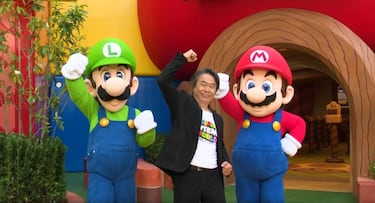
Shigeru Miyamoto has summed up in just a few sentences a philosophy that helps explain why Nintendo continues to hold such a unique place within the industry. In an extensive interview with Famitsu to mark the Japanese magazine’s 40th anniversary, the creator of Mario and The Legend of Zelda argued that the Kyoto-based company has managed to attract fans around the world because its projects don’t start by looking at trends, financial forecasts, or other companies’ formulas for success.
An individual’s personal hobbies – are often the ones that resonate globally.
Shigeru Miyamoto
“We focus on who we’re actually doing this for,” says Miyamoto. The question seems simple, but it contains a fundamental difference. Nintendo doesn’t start by asking which genre sells best, which mechanic is on the rise, or which concept could be replicated quickly; instead, it begins with a game idea that its developers find fun. The product is built around an experience, not an opportunity identified on a spreadsheet.
Fun Over Trends
Miyamoto puts it in particularly straightforward terms: “We don’t start by asking, ‘What’s trending right now?’” That doesn’t mean Nintendo ignores the market or that its leaders are oblivious to results. The company seeks profits, like any business, but the veteran designer rejects the idea that immediate profitability should become the guiding principle behind creation. For him, constantly wondering whether an idea will make money right away prevents the creation of something truly unique.
His argument becomes even more compelling when he states that “I really dislike terms like ‘depreciation’ or ‘recouping costs.’” Miyamoto believes it is insufficient to celebrate the fact that a production has recouped its investment if, in order to do so, it has drained the talent of many people without creating something lasting. Breaking even may prevent a loss, but it does not automatically make a project a creative or business success.
Nintendo’s history offers several examples of this way of thinking. Mario wasn’t designed based on the image of a universal hero, but he ended up becoming an icon because he starred in games that were easy to understand and extraordinarily fun. Pokémon, for its part, translated Satoshi Tajiri’s hobby of collecting insects and sharing his findings with other children into a game, resulting in an RPG unlike any that had come before it.
These are specific, even intimate, ideas that ended up resonating with millions of people. Miyamoto argues that what is deeply personal can take on a universal power, whereas products deliberately crafted to appeal to everyone tend to lose the identity of those who made them. When no one can recognize the voice behind a work, it also becomes harder to remember it.

Related stories


Its ideal model involves dedicating the necessary time to create something exceptional and ensuring that, precisely because of its quality and character, it ultimately generates substantial profits. Nintendo is wary of the shortcut that makes potential profit the sole starting point. First, there must be a fun way to play. The money comes later, as a result of having created something that will be remembered for a long time.
Follow MeriStation USA on X (formerly known as Twitter). Your video game and entertainment website for all the news, updates, and breaking news from the world of video games, movies, series, manga, and anime. Previews, reviews, interviews, trailers, gameplay, podcasts and more! Follow us now!
Complete your personal details to comment