


Nobody wants Russell Westbrook
Options are dwindling, and the point guard, a towering figure in the NBA in recent years, remains without a team heading into what would be his 18th season.
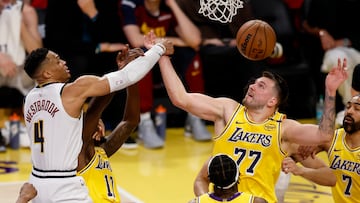
It’s July 23 and Russell Westbrook still doesn’t have a team. A sign, perhaps, that the end of the road is near – though not necessarily today, or even this season. Odds are he’ll find a landing spot, sign another veteran minimum deal, and head into what would be his 18th season in the NBA, a league he entered in 2008 as the No. 4 pick and in which he became first a volcanic superstar and then one of the most polarizing players of his generation.
Loved with cult-like loyalty – particularly by fans still holding on from his OKC Thunder days (2008–2019) – and criticized by an ever-growing contingent, Westbrook has carved out a complex legacy. But measured objectively, his résumé makes a strong case for the Hall of Fame: nine-time All-Star (twice MVP of that event), NBA MVP in 2017, two-time scoring champion, three-time assist leader, nine-time All-NBA selection.
What records define Russell Westbrook’s legacy?
And of course, he’s the all-time leader in triple-doubles (203, surpassing Oscar Robertson’s 181), and the man who made that once-rare stat feel almost mundane. From 2016 to 2019, he averaged a triple-double for three straight seasons – something Robertson had only achieved once, and never on repeat. That run began just after Kevin Durant left Oklahoma City, when Westbrook took total command of the franchise – to a degree that was sometimes brilliant, sometimes problematic.
Still, his jersey is a lock to hang from the rafters of the Thunder’s upcoming new arena (set to open in 2028), and it wouldn’t be surprising to see a statue of him outside, either. He remains an emblem of the franchise’s early era – a cornerstone of the team that did everything but win a title.
Will Westbrook retire with the Thunder?
It also wouldn’t be surprising if Westbrook, once he decides to walk away from the game, signs one of those symbolic one-day contracts to retire with the Thunder – the team where he became a generational figure. That title that eluded him, the ultimate prize, became the narrative wedge: elevating him as a lone wolf for some, and diminishing his legacy in the eyes of others.
Post-OKC, his path has zigzagged through chaotic chapters: a disappointing reunion with James Harden in Houston, a forgettable stint in Washington, a disastrous spell with LeBron James and Anthony Davis in Los Angeles, an up-and-down run with the Clippers, and a respectable – but ultimately unsuccessful – year with the Denver Nuggets. Eleven years with the Thunder, followed by five teams in six seasons.
Why did Westbrook leave Denver?
Now he’s searching for a sixth team in seven years, his seventh overall. Nearly a month into free agency, he remains unsigned – despite opting out of a $3.5 million player option in Denver to test the market again. Many assumed he’d pick up that option and stick around, especially given the tepid market, his underwhelming playoff exit, and the hand ligament surgery he underwent.
But he bet on himself. Seventeen years into his career, Westbrook entered free agency and found the door mostly shut. His name came up in early speculation – linked to the Knicks, Timberwolves, a potential stopgap for the Mavs while Kyrie Irving recovered (Dallas chose D’Angelo Russell instead). He was floated for roles with the Kings, Pistons, Pacers – the latter needing injury cover for Tyrese Haliburton. But nothing materialized. It’s July 23 and Westbrook is still unsigned.
Why is it so hard for Westbrook to find a team?
For a player like him – turning 37 in November, entering year 18 – fitting into a roster is no easy task. His explosive athleticism, once the engine of his game, has waned with time and chronic knee issues. His game hasn’t aged gracefully, and he carries too much baggage to be seen by many as just a low-risk veteran minimum pick-up. That’s how a number of teams reportedly view him.
To his credit, Westbrook has gradually adjusted to the reality of a shrinking role. He’s accepted a place off the bench, a situation that would once have been unthinkable. But his style remains high-usage, high-volume, low-efficiency – and at his age, that’s a red flag for many front offices.
How did Westbrook perform with the Nuggets?
That said, he showed flashes in Denver. He embraced a secondary role, at times finding real chemistry with Nikola Jokić – playing solid defense, staying locked in offensively with smart cuts and corner jumpers. He was better with starters than in second units, where his flaws were harder to hide.
He played 75 games and averaged over 28 minutes – a strong return for a minimum deal. His playoff run had bright spots (notably against the Clippers) and low ones (against the Thunder from Game 3 onward, when the hand injury took its toll) – a pattern that has echoed across his post-prime seasons.
Is this the end of Russell Westbrook’s NBA career?
And yet, here we are: Russell Westbrook, a living piece of NBA history, is without a team. Damian Lillard has returned to the Blazers, Chris Paul to the Clippers – but Westbrook won’t be rejoining the now-title-winning Thunder. Their rotation is set, their chemistry intact. They’re not looking for disruptions.
So Westbrook waits. For offers. For opportunities. For something. You’d expect a spot to open up before the season starts. But if it doesn’t – if the silence continues – we may be witnessing the quiet close of one of the most singular careers in modern basketball. For better and worse.
Related stories
Get your game on! Whether you’re into NFL touchdowns, NBA buzzer-beaters, world-class soccer goals, or MLB home runs, our app has it all.
Dive into live coverage, expert insights, breaking news, exclusive videos, and more – plus, stay updated on the latest in current affairs and entertainment. Download now for all-access coverage, right at your fingertips – anytime, anywhere.
Complete your personal details to comment