


Biohacking: soccer’s new obsession that Haaland and Cristiano are already using
The promise to optimize sleep, recovery and nutrition seduces football’s elite.

Fernando Amorebieta, the former combative Athletic Club centre-back, has generated €2 million through Nice Mood, his red-light therapy startup. Cristiano Ronaldo has invested in Bioniq, a personalised supplementation company whose assets were acquired by Herbalife in a deal that could reach €130 million. And Marcos Llorente, known for walking shirtless in zero-degree weather and eating dinner at 6 p.m., has just parted ways with Aureo Lightstyle, the infrared eyewear company he helped found.
Three footballers, three businesses, and the same obsession: biohacking. An industry that promises to optimise the body down to the smallest detail and that has found the perfect showcase in elite football. But amid the flood of metrics, supplements and technologies, doubts also linger. “The body is not an Excel sheet,” warns Víctor Jiménez Aransay, a physiotherapist and strength and conditioning coach specialised in high-performance injury prevention who has worked with players such as Sergio Ramos, Luka Modrić and Marco Asensio.
His remark captures the debate surrounding a trend that blends science, performance, investment, marketing and a growing obsession with measuring everything. The central question is simple: where does genuine enhancement end and commercial promise begin? And to what extent does any of this truly extend a career?
In football, age has always shaped how players are viewed. Growing older usually means losing value, physical sharpness and market appeal. But that logic is beginning to shift. Performance is no longer determined only on the pitch: it is also shaped through sleep, recovery, nutrition, light exposure, stress management and data interpretation. Many refer to all this as biohacking.
“Real biohacking doesn’t start with the flashiest things, but with the basics: sleeping well, recovering properly, managing workload and controlling stress. That’s what separates a fad from a real performance strategy,” explains Jiménez Aransay.
The most visible practices are inevitably the ones that attract the most attention. Red-light therapy, cryotherapy, blue-light-blocking glasses, smart rings and real-time glucose sensors are no longer curiosities. They are already embedded in many players’ routines and have become popular because they are easy to showcase: they appear on social media, are associated with elite physiques and reinforce the idea that performance can be hacked with the right device.

But the risks are obvious. “When fans see them, it’s easy for them to believe that’s the secret and want to copy it,” warns Jiménez Aransay. What forms part of a carefully supervised system for a professional athlete, overseen by doctors, coaches and nutritionists, can easily become empty imitation outside that environment.
Cryotherapy is one of the flagship practices of this movement. Erling Haaland reportedly spent around €55,000 on a cryotherapy pod for his home and combines red-light and extreme-cold treatments to keep his body in peak competitive condition. He also follows routines that include mouth taping, electronic isolation and a diet based on offal, raw milk and ultra-filtered water.
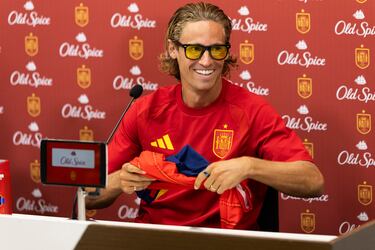
Marcos Llorente has become Spanish football’s leading biohacking figure. His cold exposure routines, blue-light-blocking glasses, red-light therapy, early dinners and defence of “real” biology have all set trends. His influence inside Atlético de Madrid’s dressing room is undeniable: teammates such as Marc Pubill have already adopted some of his methods and openly acknowledge that Llorente “has indoctrinated them”.
Roony Bardghji has also embraced the trend, following Llorente’s example with sleep routines of up to ten hours and the use of specialised glasses. At Barcelona, players such as Lamine Yamal already use red-light devices as part of their recovery routines. Robert Lewandowski, by contrast, represents a more traditional profile: strict nutrition, discipline and a meticulous approach to diet as the foundation of longevity.
Cristiano Ronaldo represents another dimension of the phenomenon: the investor-athlete. His involvement with Bioniq transfers his well-known obsession with performance into the business world. The company designs personalised supplements based on blood biomarkers and transforms the promise of extending an athletic career into a global business model.
His own routine, reportedly costing more than €900,000 a year, has become the template many players look to as they dream of competing into their forties. Ronaldo was one of the first footballers to aggressively optimise his body through cryotherapy, hyperbaric chambers, six daily meals and temperature-contrast therapy. The strategy has paid off: at 41, he is preparing for what would be his sixth World Cup as Portugal’s standard-bearer.
Fernando Amorebieta, meanwhile, represents the former player who recognised where the industry was heading and merged footballing capital with investment opportunities. His project emerged during the Paris 2024 Olympic Games, where he introduced red-light therapy to the Dominican national team with notable results. Today, Nice Mood generates millions in revenue and has established itself as a benchmark in light-based wellness.
The race to optimise the body is no longer only individual. Clubs themselves have turned performance into another competitive battleground. Barcelona, through the Barça Innovation Hub, works with genetic analysis to anticipate injury risks and tailor workloads. Real Madrid uses intermittent hypoxia chambers to optimise recovery, while Manchester City adjusts training and light cycles according to players’ circadian rhythms. Sleeping is no longer simply resting: it is part of performance.
The logic has become increasingly preventive. The objective is no longer only to intervene after an injury occurs, but to detect warning signs before the body reaches its limit.
Jiménez Aransay explains it with a simple metaphor: “Our goal is no longer just to wait for the player to get injured or burned out. The footballer’s body works almost like a traffic light: if you only look at it when it’s already red, you’re too late.”
Where clubs once focused primarily on treatment, the emphasis has now shifted towards anticipation.
This is where the doubts begin.
Marcos Llorente’s recent split from Aureo Lightstyle is not merely a business development. It also reflects the rapid expansion of an industry in which it is becoming increasingly difficult to separate scientific evidence from pure marketing. The Atlético de Madrid player announced the decision in a brief social media message: “I have decided to end my stage as a partner.” A full stop on a relationship he himself had heavily promoted.
“When something becomes fashionable, it also becomes the perfect showcase for selling products simply for the sake of selling them. Today, it seems almost anything can be labelled biohacking if it promises more energy, better sleep or greater longevity,” says Jiménez Aransay.
Madrid nos espera 😎 pic.twitter.com/W1fyinzIeZ
— FC Barcelona (@FCBarcelona_es) February 11, 2026
For that reason, the real question should not only be “Does this have scientific backing?” but also “Does this make sense for this specific person, at this specific moment, and for this specific objective?” A tool can be useful in one context and completely irrelevant in another. The difference lies in the criteria used to apply it.
The greatest danger, however, is not only the sale of miracle solutions. It is also the growing obsession with data. “There are athletes who actually sleep worse because they are worried about whether the watch tells them they slept well. That is the exact opposite of what we are trying to achieve,” warns the physiotherapist.
And he returns to the phrase that runs through the entire debate: “The body is not an Excel sheet.”
Biohacking also raises an uncomfortable question: to what extent can it become a structural advantage? While Europe’s elite clubs invest millions in performance departments, biometric sensors and cutting-edge recovery centres, many smaller clubs struggle to maintain even a solid medical structure.
“The real competitive advantage is not the most expensive gadget, but the consistency of applying the fundamentals,” Jiménez Aransay points out. Still, he acknowledges that “when a major club invests in advanced performance departments while a modest club can barely cover medical staffing, a genuine gap opens up.”
The line between optimising performance and competing on equal terms is becoming increasingly blurred. Technology places players in vastly different preparation environments. It does not replace fundamentals, but it amplifies differences. The value lies not only in having access to these tools, but in knowing how to interpret the data, adjust workloads and consolidate habits. Clubs with greater resources turn that applied knowledge into a sustained competitive advantage over time.
Biohacking, then, has firmly entered modern football. It promises longer careers, fewer injuries and ever more sophisticated control over performance. But amid the sensors, metrics and fashionable therapies, Víctor Jiménez Aransay’s warning still defines the debate: “Optimising is not squeezing. It is helping the body function better for longer.”
Because in a sport obsessed with measuring everything, there is still one thing no algorithm can fully control: balance.
Roony Bardghji se ha unido a la tendencia del 'biohacking', al igual que Marcos Llorente.
— FCB PRIME (@fcbisprime) March 28, 2026
Esto incluye dormir entre 9 y 10 horas, evitar las pantallas antes de acostarse y usar gafas que bloqueen la luz azul.
El extremo del Barça también utiliza baños de hielo y saunas para… pic.twitter.com/kfH9ubU7tI
Get closer to the game! Whether you like your soccer of the European variety or that on this side of the pond, our AS USA app has it all. Dive into live coverage, expert insights, breaking news, exclusive videos, and more. Plus, stay updated on NFL, NBA and all other big sports stories as well as the latest in current affairs and entertainment. Download now for all-access coverage, right at your fingertips – anytime, anywhere.
And there’s more: check out our TikTok and Instagram reels for bite-sized visual takes on all the biggest soccer news and insights.
Complete your personal details to comment