


Are Green Card holders eligible for Social Security? Requirements and the 40-credit rule
Millions pay into the system, but not everyone qualifies. Here’s what determines eligibility for green card holders.
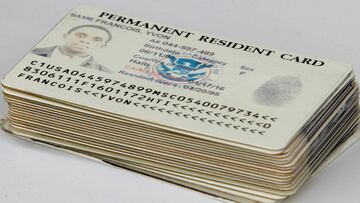

More and more, immigrants are building careers and retiring in the United States. But are green card holders eligible to receive Social Security benefits?
The short answer is yes, but only if they meet specific requirements tied to work history, taxes and what’s known as the “40-credit rule.”
Who qualifies for Social Security?
Lawful permanent residents, commonly known as green card holders, are generally eligible for Social Security benefits if they have worked in the U.S. and paid into the system through payroll taxes.
Like U.S. citizens, eligibility is primarily based on earning enough “credits” over time. In most cases, that means working for at least 10 years. Green card holders may also qualify through a spouse or, in some cases, as dependents or survivors of a worker who paid into Social Security.
What is the 40-credit rule?
At the center of eligibility is the Social Security credit system. Workers earn credits based on their income, with a maximum of four credits available per year. As of 2026, a worker earns one credit for every $1,890 in earnings.
To qualify for retirement benefits, individuals typically need 40 credits, equivalent to about 10 years of work. Without those 40 credits, most green card holders will not be eligible for standard retirement benefits, although some exceptions may apply depending on family eligibility or international agreements.
Are there limits for non-citizens?
While green card holders can access Social Security, there are additional considerations compared to U.S. citizens. For example, individuals who spent significant portions of their careers working outside the U.S. may receive reduced benefits if they have fewer credits in the system. In some cases, international “totalization agreements” between the U.S. and other countries can allow workers to combine credits earned abroad.
There can also be restrictions tied to residency. Extended periods living outside the United States may affect benefit payments, particularly for non-citizens.
What happens if you leave the U.S.?
For green card holders, time spent outside the country can impact eligibility and payments. In general, Social Security benefits may stop if a non-citizen remains outside the U.S. for more than six consecutive months, although exceptions can apply depending on the individual’s circumstances and country of residence. That makes it important for retirees planning to live abroad to understand how their status could affect their payments.
The rundown
Green card holders are not excluded from Social Security, but access is not automatic. To qualify, most must meet the same core requirement as U.S. citizens - earning 40 credits through years of work and paying Social Security taxes.
With retirement planning increasingly global, understanding how those rules apply can make a significant difference in long-term financial security.
Related stories

Social Security and SSI: July payments set to kick off

Get closer to the game! Whether you like your soccer of the European variety or that on this side of the pond, our AS USA app has it all. Dive into live coverage, expert insights, breaking news, exclusive videos, and more. Plus, stay updated on NFL, NBA and all other big sports stories as well as the latest in current affairs and entertainment. Download now for all-access coverage, right at your fingertips – anytime, anywhere.
And there’s more: check out our TikTok and Instagram reels for bite-sized visual takes on all the biggest soccer news and insights.
Complete your personal details to comment