


Goodbye to NASA’s largest research library
The holdings of the Goddard Space Flight Center Library, which include unique documents ranging from the early twentieth century to the Soviet space race, will be placed in storage or discarded.
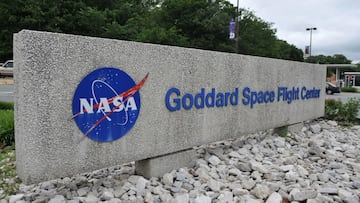
Whenever a library closes, knowledge dies. Learning, history, and the future fade with it.
Books are never read in the same way twice, and we never reach them at exactly the right moment. Returning to them is not only a refuge but also a way to expand our understanding and uncover details we once overlooked.
That the collections of the Goddard Space Flight Center Library, which contain unique documents from the early twentieth century through the Soviet space race, are to be stored away or discarded is a genuine tragedy.
Following orders from Donald Trump, as explained by NASA spokesperson Jacob Richmond, during the first months of 2026 the agency will review the library’s holdings over a 60-day period. Based on the outcome of that review, some materials will be transferred to a government warehouse, while the rest will be thrown away.
Gone. As if history, experience, and research no longer had a place. As if they were an inconvenience that takes up space and must be eliminated.
The library’s closure is part of a larger cost cutting scheme
As reported by The New York Times, the closure of this library is part of a broader reorganization under the Trump administration. That plan includes shutting down 13 buildings and more than 100 science and engineering laboratories on the campus, all of which must be ready for closure by March 2026.
This restructuring was supposedly planned in advance. Closing the facilities would save $10 million a year and avoid an additional $63.8 million in costs related to maintaining historical documents, archives, report management, and research records.
When the @NASAArtemis II crew flies by the Moon, they'll conduct science investigations, including lunar observations, to inform future deep space missions. Goddard scientists have been training the crew on everything from photography to lunar terrain.https://t.co/MTsEs76hXx pic.twitter.com/tjGI4lmimT
— NASA Goddard (@NASAGoddard) January 2, 2026
A preeminent repository of knowledge and birthplace of programs to explore the heavens
The importance of the Goddard Center is unmatched. It is the nation’s primary spaceflight complex, described as “the largest organization of scientists, engineers, and technologists who build spacecraft, instruments, and new technologies to study Earth, the Sun, our solar system, and the universe.”
Now that accumulated wisdom must be put away because maintaining it is expensive. What has been digitized will survive. What has not will cease to exist.
Thousands of books by Soviet rocket scientists describing missions from the 1960s and 1970s, along with information on experiments conducted during NASA missions at the height of human space exploration, will be forgotten.
Founded in 1959, the Goddard Space Flight Center has witnessed the development of the Hubble and James Webb space telescopes, both designed and built on the Greenbelt campus. Probes to explore the Sun, an asteroid, and the atmosphere of Mars were also designed and built there.
The center developed a satellite system that records changes in Earth’s atmosphere, ice cover, oceans, and land surface, providing data essential for scientific research and disaster response. Future missions now taking shape at Goddard include spacecraft to explore Venus and Titan, Saturn’s moon, as well as a new telescope designed to search for planets in deep space that could potentially harbor life.
Related stories
Get your game on! Whether you’re into NFL touchdowns, NBA buzzer-beaters, world-class soccer goals, or MLB home runs, our app has it all.
Dive into live coverage, expert insights, breaking news, exclusive videos, and more – plus, stay updated on the latest in current affairs and entertainment. Download now for all-access coverage, right at your fingertips – anytime, anywhere.
Complete your personal details to comment